
Patiently bearing sorrows and not blaming other people for our own disasters is a sign of true knowledge. Sorrows come upon us either to teach us something, to expunge previous sins, to correct any negligence there might be or to prevent future sins.
For spiritual people struggling to acquire and retain the knowledge of God, understood as entry into the energy of divine eternity, intellectual scientific learning is insufficient, no matter how empirical and apparently irrefutable a character it may have. Human science provides the means to express the experience of existential knowledge, but is incapable of transmitting this knowledge in an authentic manner without the co-action of grace. Were this not so, then our ‘ascents’ into the spheres of the Divine existence- of real Truth- would depend on secular education and intellectual capacity, which is not the case. At this point it becomes clear that Elder Sophrony is operating within the current of Orthodox Patristic thought, which rejected the possibility that the ...
Being a monk means ‘a mind contemplating God’.

Rev. Patrick H. Reardon Finally, a third brand of philosophy against which divine revelation should put us on guard is, I submit, the nominalism that appeared in the eleventh century, at exactly the time when the Eastern and Western churches became divided. The villain in this case is John Roscelinus. Since Roman Catholics, after his condemnation at the Council of Soissons in 1092, had the good sense to burn most of his writings, we are obliged mainly to rely on secondary sources to study Roscelinus, which is often enough the case in the history of philosophy. And surely it is significant that the sharpest contemporary critic of Roscelinus was that most real of Realist philosophers, St. Anselm of Canterbury, himself ...

It has been claimed by some that Christianity is not merely no help to the family, but that it actually contributes to its breakdown. In other words, it has damaged the prestige of paternal authority within the context of the small family. This reasoning has been put forward with references to certain excerpts from Christ’s words, but these have been rather superficially interpreted, taken our of context and made to stand on their own. The texts which have been mobilized in this way come from the Evangelists Matthew and Luke . Let’s look at the most typical: ‘Do not think that I have come to bring peace to the earth? I have not come to bring peace, but a sword. ...
If you want to teach the love of God, don’t use speech. Try to be polite, always, and to be loveable yourself.
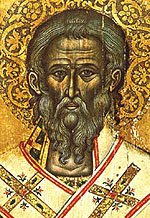
Saint James was the son of Joseph the Betrothed from his (first) marriage. He was blessed by God while he was still in his mother’s womb and was so righteous in his life that all the Jews called him the “Just”. Even from a very early age, James lived a very ascetic life. He did not partake of wine or other strong drinks. In imitation of Saint John the Baptist, he never ate anything that had had the breath of life within it. He never shaved his head, as the Law ordains for those who devote themselves to God (Num. 6, 5). He never washed his hair nor was he anointed with oil, since he cared more for the state ...
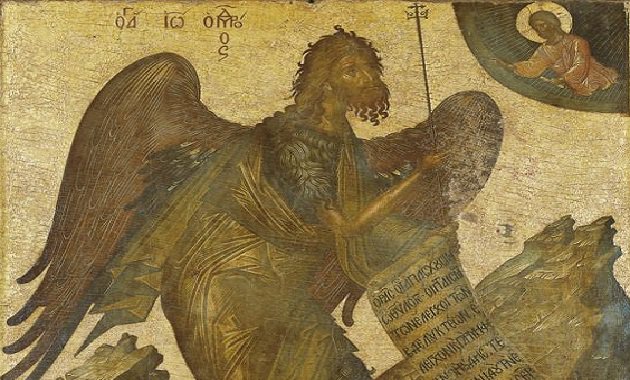
In the synaxarion for Saint James (October 23), we’re told that, like Saint John the Baptist, “he never ate anything that had had the breath of life within it”. Yet we’re also told that John ate locusts. Even if he was, as some believe, as Nazirite, he could have eaten locusts, since they are the only insect sanctioned for human consumption in the Jewish dietary laws (Leviticus 11,12). And locusts do, indeed, flourish in and around Israel. On March 21, 2013, the BBC reported that Israel was “in the grip of a locust invasion”, and that Israelis were making the most of this by deep-frying the insects or covering them in chocolate. The problem is that this was an “invasion”. ...
Rev. Patrick H. Reardon Now, on the basis of the foregoing reflections about man’s knowledge of the true God, are there any directions indicated about what sorts of philosophy we should avoid? We do not have to respond to this question in full detail. Just a brief mention of certain schools of philosophy, with even the faintest recognition of what they hold, is sufficient grounds for discerning their incompatibility with the truth we know in Christ. For example, I submit that Christians should spontaneously reject postmodernism’s radical divorce of narrative from truth. And, apart from seminary professors, most Christians normally do. Similarly, we would promptly repudiate Darwinian evolutionism, Marxist dialectical materialism, the naturalism of Bertrand Russell, the New Age anthropology of ...
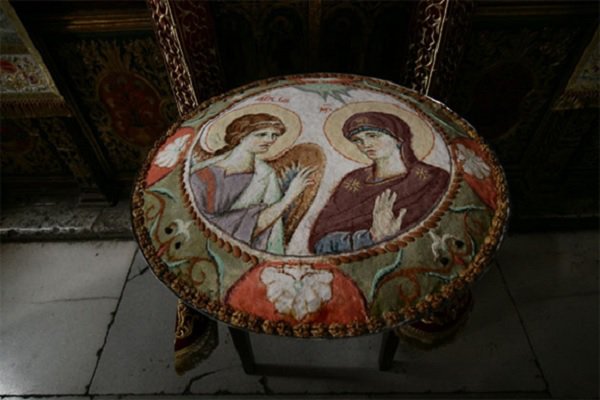
Separate memorial services are not held for monks on the Holy Mountain. Together with the kollyva for the Saint, a small saucer of kollyva is prepared for the departed. Abbots over the last 100 years are commemorated, as are priest and monks over the last thirty. Kollyva is made every time an icon is put on display in the church to be venerated. Every Saturday, however, there is always a service for the departed, with kollyva, unless it coincides with the handing back of a feast of the Lord. The kollyva here is a little boiled wheat on a tin plate, which is placed under the icon of Christ. The kollyva for a feast requires genuine patisserie skills. On the surface, ...
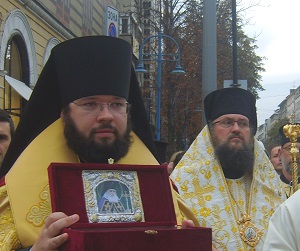
On 21th October 2016 Bulgarian Orthodox Church received relics from saint Luke (Luka Voyno Yasenetsky), Archbishop of Crimea and Sympheropol, confessor and wonderworker (1877-1961). Shortly after glorification of saint Seraphim of Sofia and receiving relics from saint Seraphim of Sarof, Bulgarian believers have the honour to receive also part from the blessing, serving and healing hands of Saint Luke whom they know well and piously venerate for years. Reliquary is brought to Sofia by Russian Bogorodsky bishop Anthony who visits Bulgaria for the first time. In his greetings to Bulgarian faithful, he said that this precious gift - piece from the relics of 20th century saint is strengthening once again the traditional close relations between Russian and Bulgarian Orthodox local churches. Church services from ...

It’s entirely obvious that wickedness and evil are the result of our disposition. Evil isn’t a component part of our nature, but the result of our free will. The devil is called the preeminent evil one, because of his excessive wickedness and because, despite the fact that we’ve done nothing to harm him, he wages an implacable war against us. This is why the Lord didn’t say: ‘Deliver us from evil ones’, but ‘from the evil one’. He thus teaches and instructs us not to reject our fellow human beings at all, over whatever harm they do us, but to direct our enmity away from them and towards him, since he’s the root cause of all evils.

A bad word makes even good people bad, but a good word turns even bad people into good. +Saint Macarius the Elder Our words have so much power, yet it’s so easy to say them without thinking. Have you ever chosen to say something nice when you didn’t feel like it? What happened? Like an oasis in the desert, a kind word can bring forth beauty. Choose to say something good today and see what comes of it! Lord, help me to choose good words that help others and reflect Your loving heart. Source: www.familylifeministry.atlanta.goarch.org
Created as God-like from the beginning, man would not accept anything irrational in his thoughts and in his life. All his thoughts and his motions were proper since they had been illuminated by the divine Grace. As soon as he was deceived and severed himself from the origin of consummate perfection, man’s personality was immediately crashed and his original ‘simplicity’ was followed by ‘complexity’. Thus the rational was replaced by the irrational. Ever since all the faculties of the human personality have been perverted, were in effect inclined towards the irrational and gave birth to passions. Man’s thoughts and deeds are not moved according to what is strictly “needed” but follow wicked intentions and habits in accordance with the prevailing ...
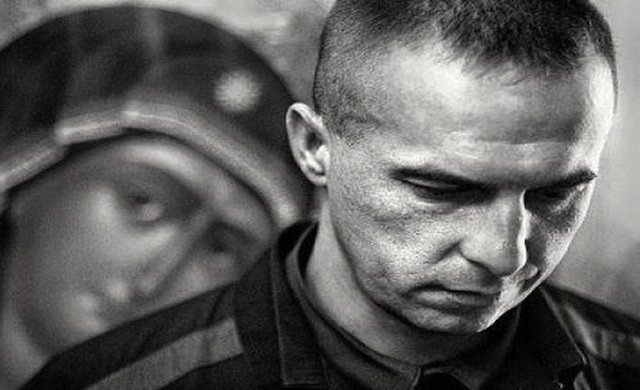
People who struggle against sin write the most lovely pages in God’s book. Because everything’s written there.
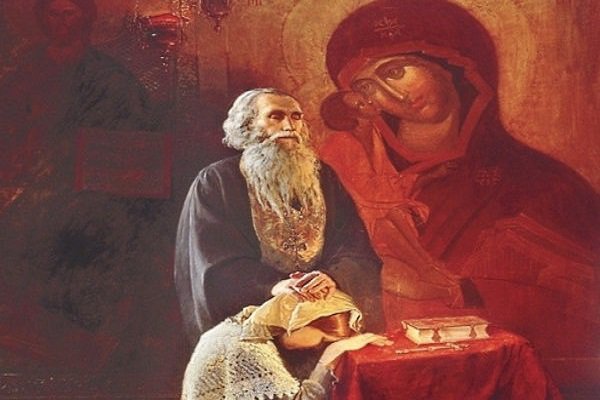
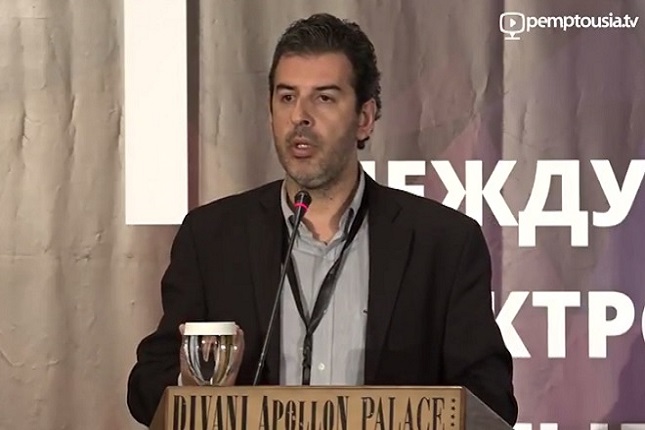
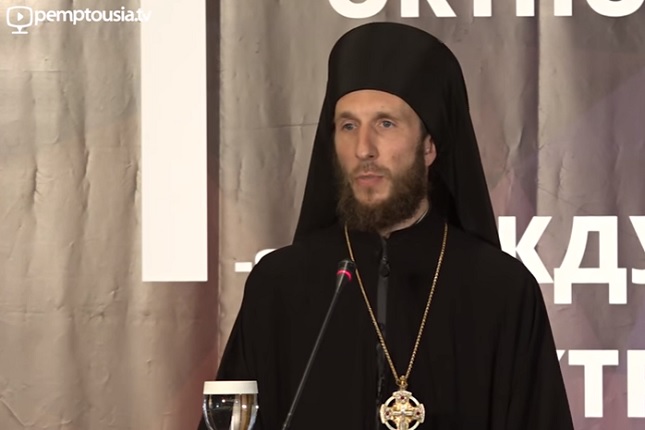
Many Christians are troubled by the issue of how to choose spiritual guide. What characteristics should they look for and what kind of relationship should develop between them? In an address to an international conference, Elder Elisaios, the abbot of the Holy Monastery of Simonos Petras on the Holy Mountain, said that it’s a good and useful thing for Christians to seek spiritual guides who they feel comfortable with and in whose presence they are happy. Looking for a spiritual guide with supernatural gifts, however, is a delusion. In an exclusive interview with Pemptousia, the same elder said that people today want to talk more than to repent in their search for divine Grace. In the old days, their used to ...