Our 6 year-old daughter Gabriella sometimes makes the most insightful observations. The other day she said, “Mom, when I feel grumpy or tired, all the ‘good stuff’ just goes away. It΄s like I can’t remember all the ways I know I am supposed to behave.” Wow, don’t we all struggle with that sometimes, even as adults? It takes a little more effort to do the right thing when we are tired, hungry or otherwise running on fumes. Self-awareness is the key to life though. I say, take the time to listen to your body. Rest when you need to rest, plan for eating so you don’t miss a meal, exercise when you are holding tension, seek the quiet company of a ...
Obedience makes people free not only of the bodily passions but also of those of the spirit.
The question ‘What is truth?’ would be better posed as ‘Who is truth?’. And the direct answer is: ‘Truth is the personal God Who is known, however, only ‘through communion in existence’. Knowledge of God is experienced as knowledge of the Persona-Person as the bearer of the whole of the Divine Being, though without being confined within Himself, but as ‘living in the other’. For formal logic, however, this is a pointer to the inadequacy of the Persona per se and therefore a denial of its absolute nature. The antinomy of the existential knowledge of the Absolute as person-persona creates the impression among representatives of science and philosophy that Christians are on shaky ground and that they’re dreamers, while ...
No matter how small the passions may seem, get rid of them straight away – completely and without hesitation - so that there’s not a trace left behind. Get rid of them with indignation and wrath. Strange as it may seem, get angry with them, because you’ll then get rid of them root and branch. No passion can dominate you or injure you unless you have a liking for it.
Rev. Patrick H. Reardon We may begin where the Bible does, with God’s revelation through his Son. How should we describe this revelation? Two adjectives that come to mind are empirical and historical. In investigating the empirical aspect of God’s sending forth of his Son, we can hardly do better than to start with the Johannine literature. This theme’s most graphic text is found at the beginning of the First Epistle of John: That which was from the beginning, which we have heard, which we have seen with our eyes, which we have looked upon, and our hands have handled, concerning the Word of life—the life was manifested, and we have seen, and bear witness, and declare to you that eternal life ...
Rev. Patrick H. Reardon A second brand of philosophy against which divine revelation should put us on guard is what goes by the name “web of belief,” in which all knowledge of the truth is interpreted as, and thus, reduced to a mere corres-pondence between the mind and reality. This appeal to a “web of belief,” an expression I believe we owe to Willard Van Orman Quine (1908–2000), recognizes only a noetic correspondence with facts, no “truths of being.” The only objects that man can know are—to borrow the expression of Joe Friday—“just the facts, ma’am.” The only basis of truth is the mind’s congruity with fact. Or, to employ the distinction and terminology of Gottfried Leibniz, this “web of belief” philosophy ...
Sometimes words lose meaning, their depth emptied from overuse. Words like: Friend, Love, Conversion… I turn over the shell of a word, a name that once meant something more, something different, and I wonder at the skin left behind. A word shed of meaning. Is it because we’ve grown too familiar with mystery? Excessively punctuating our everyday language with words that once expressed wonder? Is this why words of awe have been emptied of substance? Or are they empty because they’ve been filled with our ego? Because in this fallen world, love means “What’s in it for me?” and friend means “How much do you mirror me?” and conversion is a matter of choosing sides. And we pray for the conversion of others, not because we love our ...
‘The rich have been made poor and hungry, but those who seek the Lord shall not lack anything that is good (Ps. 33). These words of wisdom do not merely suggest a way out of our material problems. Nor, again, do they offer a proposal for the solution of issues of social class. Their meaning has a Eucharistic perspective. The Lord comes to give us what we actually need: God Himself. He wants us to be participants in real life, in eternal life, which is His body and blood. It is in the Divine Eucharist, where the Lord Himself is offered in the form of bread and wine, that we experience the true meaning of not being deprived of good things ...
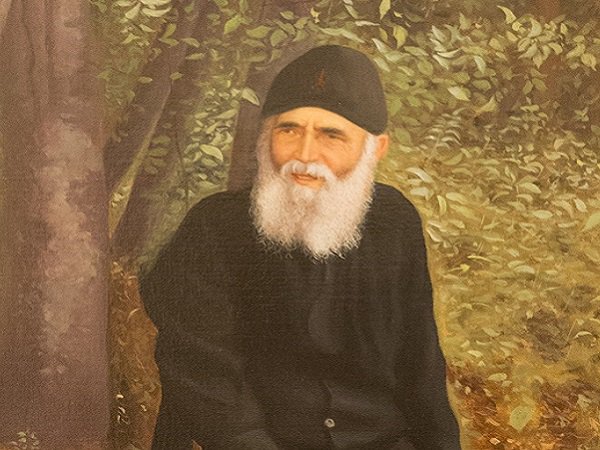
There are times, in religious circles, when confusion arises over which people are mentally ill and which are possessed by demonic energy. When Saint Païsios the Athonite was asked how the mentally ill can be distinguished from the possessed, he answered: ‘Any ordinary doctor who’s in the Church can diagnose that. If people are possessed and they approach a sacred object, they go to pieces. From this it’s obvious that they have a demon. If you give them a little holy water or make the sign of the cross over them with a holy relic, they react, because the demons are cringing inside them. If, on the other hand, they’re suffering from a mental illness, they don’t react at all. Even ...
All the other qualities of the divine nature which we can discern surpass the measure of human nature. Humility, however, is innate to us and co-exists with all the things which come from below, have earthly components and will fall back into the earth. You yourself acquire the features of blessedness when you imitate God as far as is humanly possible. Don’t let anybody think that acquiring humility is easy and needs little effort. On the contrary. It’s more tiring than any of the other virtues we pursue. Why is this? Because while those people who’ve received the seeds of good are sleeping, they receive the seeds of an opposite kind from the enemy of our lives, and pride takes ...
“I hear you’re a minister,” the hygienist remarked, fastening the bib around my neck for a dental cleaning. “May I ask what kind?” “Eastern Orthodox,” I said quickly, as the tools of her trade descended. Hygienists are often good conversationalists. Ironic, given the complications faced by those on the other side of the dialogue. My reply was unhelpful. “Forgive my ignorance, but that’s not Christian, right? So you’re Jewish?” I responded by rephrasing that I was an “Orthodox Christian.” “Where does that fit in?” she proceeded. “I’m Protestant, and I know about Catholicism, but ‘Orthodox’ is a new one.” I waited for a break in the scaling before replying: “We’re actually the oldest church.” Her brow furrowed, and I attempted elaboration before the tools returned to work. “Pentecost ...
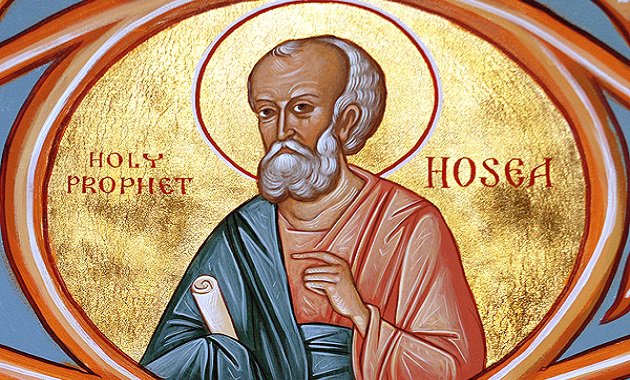
We are told in his book that the prophet Hosea was the son of Beeri and came from the northern kingdom. According to the heading of his book he was active during the reigns of Uzziah (787-736 B.C.), Jotham (756-741), Ahaz (741-725) and Hezekiah (725-697), kings of Judah, and during the reign of Jeroboam II, son of Jehoash, (787-747) king of Israel. His preaching ministry seems to have been in the 8th century, after Amos and before Isaiah. Source: www.saint.gr Despite the fact that the kingdom was enjoying a period of prosperity and material affluence, its religious life was in crisis due to the introduction of alien gods. The priests of the time performed their duties in a purely professional ...
Egotism is an absurd passion which is a real scourge of the whole of the human race. Everybody suffers from this terrible disease. Egotism makes a mockery of people and they become a laughing-stock. God calls upon us to fight this egotism, to defeat it, to free ourselves of it.
Charles Williams, one of C.S. Lewis’ circle of friends, once wrote a book entitled, The Descent into Hell. In it he chronicles the slow inexorable damnation of a soul. Choices made or not made – a chronicle more of spiritual ennui than of willful rebellion – it is a very sobering novel. There is an understanding of hell that goes far beyond the typical lake of fire and burning Gehenna. Those images, though Biblical, frequently do not speak to the full existential character of hell. Thus it becomes something of a commonplace in our time to think of hell much like heaven – just one of the alternatives we face in life after death. Neither are considered alternatives within the present ...
Bruce Chatwin (1940-1989). One of the most enigmatic and contradictory personalities of the last century, the writer, Bruce Chatwin, came to have a close relationship with the truth of Orthodoxy, mainly through the attraction he experienced towards the life of the monks of the Holy Mountain. A constant traveller, a nomad student of nomads, he found in Eastern Christianity many of the answers to issues which troubled him throughout his life, and especially in its last stages when he suffered from AIDS. Bruce Chatwin (l.), Fr. Luke Majoros (c.) and Fr. Mitrofan (r.), both from Hilandar. He was born and grew up in Sheffield. He was educated at Marlborough and when he left took a job at Sotheby’s. It was here that he ...
The “Milk-Giver” of the Hilandar Monastery on Mt. Athos Today’s icon dates as far back as the 6th century, residing in the monastic community of St. Sava (or Sabbas) in Jerusalem. Shortly before his death, the saint prophesied that a royal visitor bearing his name would visit the lavra. The Saint instructed his brothers to give the visitor the icon of “The Milk-Giver” and St. Savas’ personal staff. It took 700 years, but a Serbian prince named Rastko Nemanjić, who had taken the monastic name of Sava arrived at the lavra. Coming to venerate the relics of the elder Sava, the saint’s staff fell at the younger Sava’s feet. Learning of the young pilgrim’s name and remembering the centuries’ old prophecy, ...
Warring against people isn’t that easy for the demons. In the course of the battle, they feel sorrow and unease, particularly when faced by stronger opponents, that is the saints and perfect Christians. Otherwise we wouldn’t be talking about a battle between us and the demons, but about our rout and extermination. Since they’d totally wipe us out without effort or any danger to themselves. So there’s tension on both sides, then. For both sides, defeat’s painful and causes consternation, whereas victory brings joy. So if they sometimes get the better of us, it’s also possible for us to pay them back.