The spiritual state and the way of life of parents is of great significance for their offspring.
The spiritual state and the way of life of parents is of great significance for their offspring.
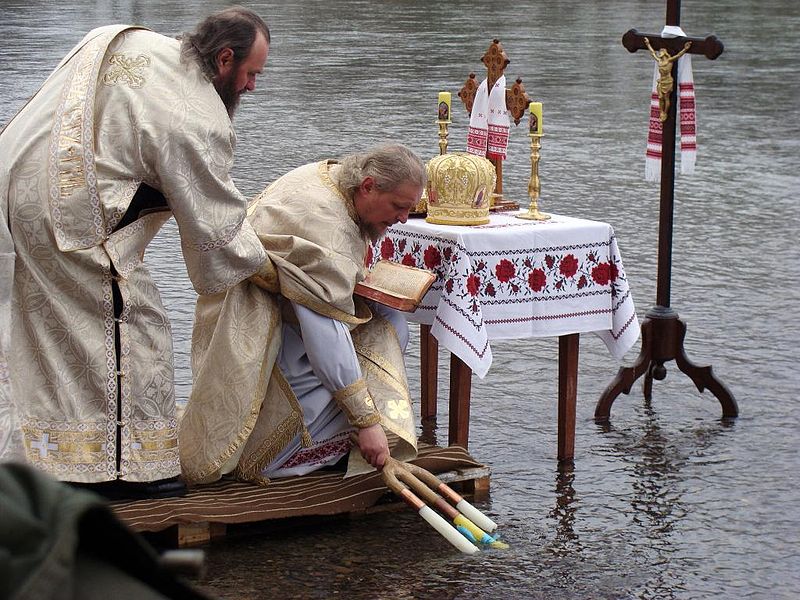
The Blessing of the Waters As we celebrate Christ’s Paschal victory – these thoughts are offered on the nature of our deliverance. One of the Psalms appointed for use in this season declares: “Now is the change of the Most High.” Pascha is indeed God’s change – which is why we ourselves are not the “agents of change.” As inhabitants of our modern culture, we find ourselves trapped in a world of “cause and effect.” It is a physical explanation of the universe that has, for all intents and purposes, become a universal metaphor, dominating religion and the most personal aspects of our lives. We see ourselves as the agents of change – or responsible for the disasters that litter our lives. ...
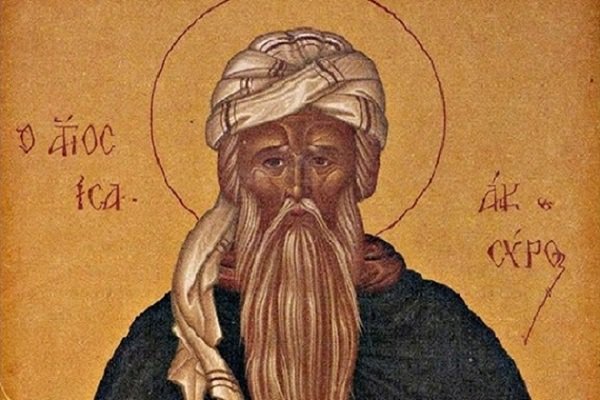
Saint Isaac the Syrian (†28 September) Saint Isaac was born at the beginning of the 7th century at Beth Quatraye in the Qatar region at the southern end of the Persian Gulf. When he was still young, together with his brother, he entered the Monastery of Saint Matthew and, after progressing greatly in the virtues, in obedience and in knowledge of the Holy Scriptures, he withdrew into the desert. His brother became the abbot of the monastery and continually pressed him to return, in order to benefit the brotherhood spiritually. His fame spread as far as Nineveh, where the faithful managed to persuade Catholicos George to consecrate him bishop (in about 648). Isaac submitted to the will of God and began ...
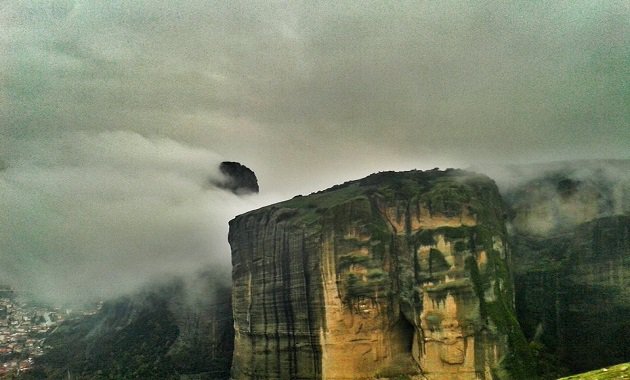
Sorrow We have a great struggle to wage against the evil spirit of sorrow, which brings the soul into despair and perdition. If the sorrow is occasioned by other people, we have to suffer it with joy, and pray for those who have saddened us, as I said before, bearing in mind that whatever befalls us does so with God’s sanction. Whatever the Lord sends us, He does only for the benefit and salvation of our soul. It may be that, in the beginning, it doesn’t seem to bring us any benefit, but later we’ll realize that what God has allowed us to go through has been better for us than what we ourselves would have wanted to happen. So we ...
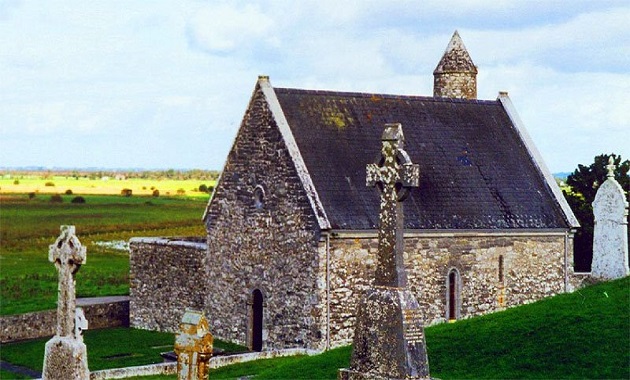
And so, thus it was that those blessed and hallowed monastics of Celtic lands modeled forth certain principles that we can still see, study, understand, and imitate today. The Celts were masters of Christian simplicity. Nowadays there is a movement in our culture to recover some simple basics, but the model is often that of the Quakers or the Shakers or the Amish. Perhaps that's because those groups are easier and more attractive to imitate; I don't know. For the Celts, however, simplicity wasn't so much a question of externals-like furniture, architecture, and so forth. It was something internal, and it was founded upon the Lord's Prayer-in particular the phrase, "Thy will be done", as we find in the later commentaries ...

The soul of a Christian should be purer than the rays of the sun.
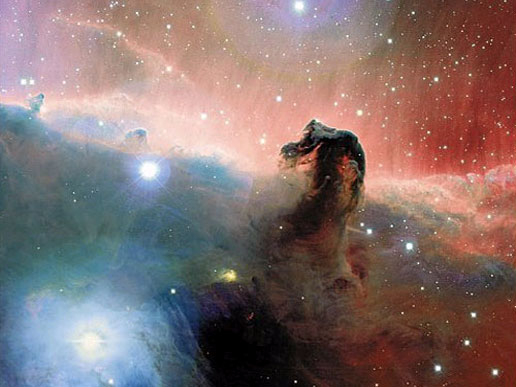
Head Nebula The recent reports of Mother Teresa’s long dark night made more news than they should have, I thought. Then I had second thoughts: this might lead to a serious discussion of faith and certainty, which are not at all the same thing. There were a few thoughtful letters to the editor, and Christopher Hitchens’s tin-eared Newsweek review, and not much more. But certain themes kept cropping up, and they matter in the debate between serious believers and serious nonbelievers. I stress the word “serious” here because the more public debates about belief (the ones involving the religious beliefs of politicians, creationism vs. evolution, etc.) are not serious at all. But the debate about faith and certainty does matter, ...
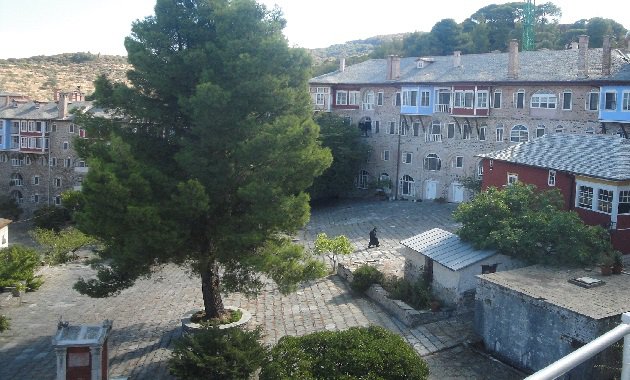
In Praise of those who have Love in their Hearts Let us therefore follow one and the same path, Christ's commandments, which elevate us to heaven and to God. Even though the word shows us many paths and many ways for people to reach the kingdom of heaven, these paths are not, in fact, many, but one, though they’re divided into many, according to each person’s ability and disposition. While we may begin from many and varied works and actions, just as travellers depart from different places and many cities, the destination we are attempting to reach is the same: the kingdom of heaven. The actions and ways of godly men must be understood as spiritual virtues. Those who begin to walk ...
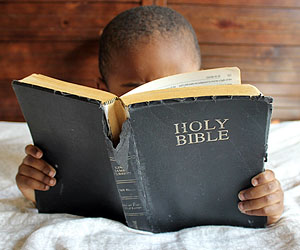
Certainly, the Gospel of Christ was not received of man and is not after man. He Himself assures us that ‘without Him’ no good work is able to be completed. This is why He says imperatively to Nicodemus that he must be ‘born again’ from above, in order to understand His mysteries, to enact His commandments and thus to become ‘fit for the Kingdom of God’. In our given situation we know that nothing is able to help us to fulfil our great purpose, which is to become children of paradise, neither the vanity of the world that surrounds us, nor the corruptible achievements of its created intelligence. Neither do we have enough light in our mind and strength in our ...
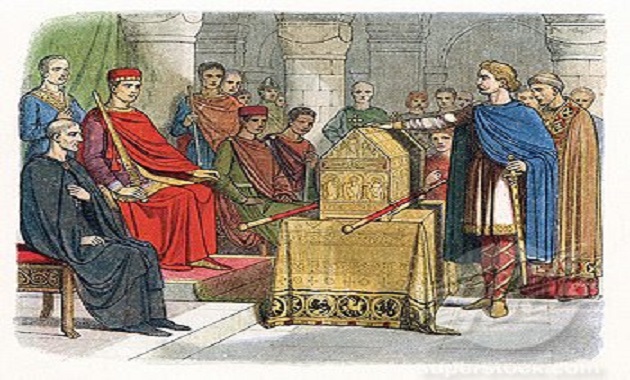
On October 14, 1066, at Hastings in southern England, the last Orthodox king of England, Harold II, died in battle against Duke William of Normandy. William had been blessed to invade England by the Roman Pope Alexander in order to bring the English Church into full communion with the “reformed Papacy”; for since 1052 the English archbishop had been... banned and denounced as schismatic by Rome. The result of the Norman Conquest was that the English Church and people were integrated into the heretical “Church” of Western, Papist Christendom, which had just, in 1054, fallen away from communion with the One, Holy, Catholic and Apostolic Church, represented by the Eastern Patriarchates of Constantinople, Alexandria, Antioch and Jerusalem. Thus ended the ...

Since it’s impossible for us humans to straighten things out, God will intervene. His intervention will be obvious as well. Then people will want to learn about God, Good times will come. Then you’ll see democracy and equality.
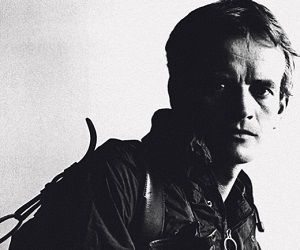
One afternoon, when he was on his way to the Holy Monastery of Stavronikita, he was enraptured by the image of a rusty cross on a rock, which was being washed by the waves. Hill, who was with him and had known him for about twenty years, saw him staring at the cross, stunned. After a while, Chatwin said: “There must be a God”. “He didn’t talk about it but I knew by his whole bearing it had affected him. I think it hit him like a bomb”, Hill recalls. (His biographer, Nicholas Shakespeare later wanted to visit the Holy Mountain to see what it was about this cross that had moved Chatwin so much. On the eve of his ...
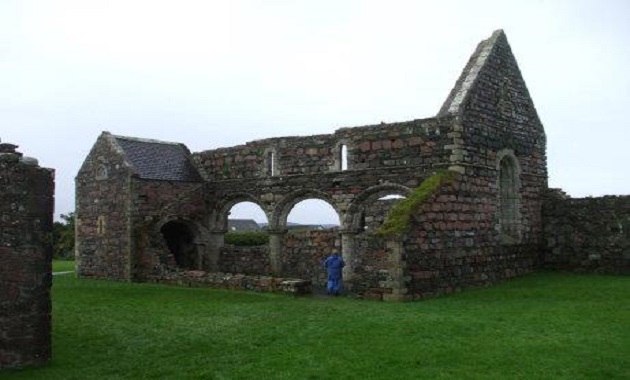
"Other monks and nuns lived out their days alone....in small wood-and-mud huts; they kept a cow or two, and accepted gladly the gifts of an occasional loaf or basket of vegetables from local farmers. The desire for a solitary life and time to spend simply yearning for God...must have drifted through the hearts of even the busiest abbot in the most bustling monastery." (Bitel, op.cit.) Monastic life was seen as an absolutely essential part of Christian life-the norm for all Christian life, not the exception-, and monks and nuns, hermits and hermitesses were the great heroes of the common people, who saw them, as St. Guthlac put it, as "tried warriors who serve a king who never withholds the reward from those ...
Avarice The passion for the acquisition of wealth, said the Fathers, is not part of human nature and is due to a lack of faith and people’s sick way of thinking. This is why it requires no small effort to combat this passion, if, with the necessary vigilance over ourselves, we wish to achieve real salvation and the fear of God in our lives. If this passion takes root in us it becomes the most tyrannical of all. And if we become subject to its encouragement and habits, then we’ve lost everything, because Saint Paul says “For the love of money is the root of all evil” (I Tim. 6, 10), that is of anger, sorrow and everything else. Indeed, the Fathers ...
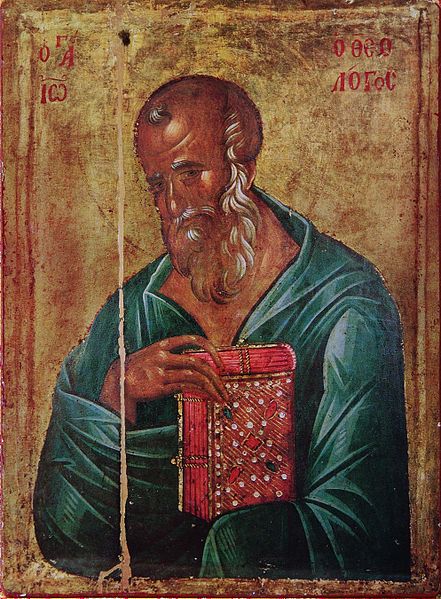
St. John the Evangelist St. John, in the prologue of his gospel, says the following: And the Word became flesh and dwelt among us, full of grace and truth; we have beheld his glory, glory as of the only Son from the Father (John 1:14). In his first Epistle he says the following: That which was from the beginning, which we have heard, which we have seen with our eyes, which we have looked upon and touched with our hands, concerning the word of life — the life was made manifest, and we saw it, and testify to it, and proclaim to you the eternal life which was with the Father and was made manifest to us — that which we have seen ...
Souls that are slothful avoid any effort and don’t seek to be completely, not only partially, sanctified in this life, have no hope of communion with the Holy Spirit and of being freed from the passions of evil. They may have been granted Divine Grace, but because they’ve been deceived by evil, they abandon every spiritual care because they’ve received a little spiritual sweetness. So it’s easy for these souls to fall into pride, because they don’t try to reach perfect freedom from the passions. Since they’re satisfied with a little dose of Grace, and make progress not in humility but pride, at some stage they’re denuded even of the gift they’ve got. Because if a soul loves God, no ...
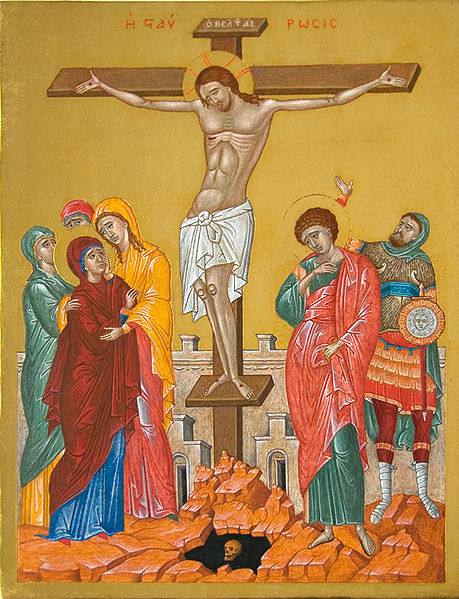
Icon of the Crucifixion One early morning not long ago I woke with a strange physical sense of myself as the product of eons, rather than my usual tired twenty-first-century self. In the period between dream and waking I had the sense of being the son of a son of a son.... And you can go on way back, to a period where our ancestors slept in dens around fires in winter breathing bone dust—even to a period before language. That particular morning I knew that I was here now because of millennia during which human beings were formed by cooperation and cannibalism, compassion and violence. It is into this flesh that the Lord became incarnate, with all its mercies and ...