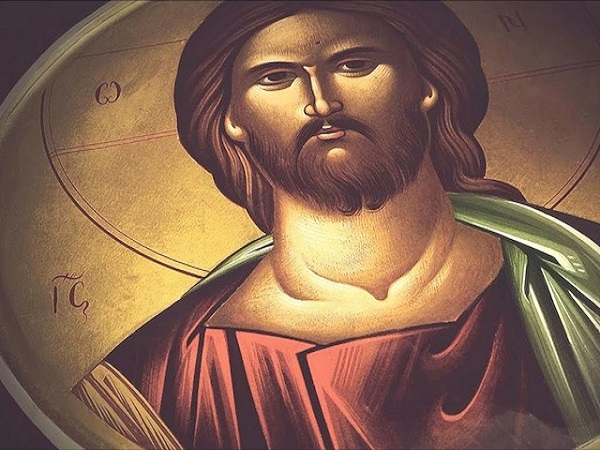
How do we please God? By observing His commandments, that is if we submit to His holy will, His law, which saves, rather than submitting to the passions which destroy the soul.
How do we please God? By observing His commandments, that is if we submit to His holy will, His law, which saves, rather than submitting to the passions which destroy the soul.
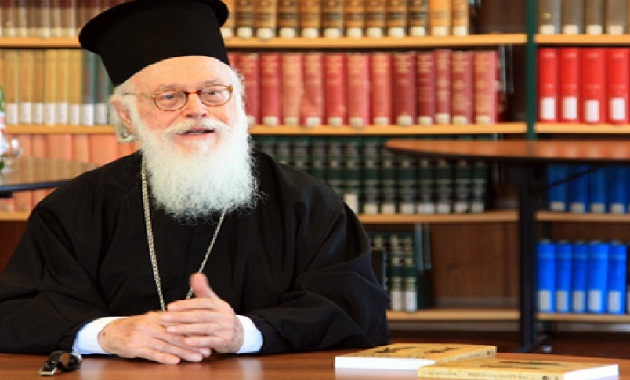
3. The problem of the relations between Christians and people of other religions is much more complicated. In general it has two facets. The first is practical: the need to co-exist with people of other religious persuasions. In this case, we have a “dialogue of life” where the only appropriate attitude is one of peaceful co-existence, respect for religious freedom and, broadly speaking, for the human rights of others. But there can also be co-operation on matters of social harmony and progress. The second is theoretical: understanding other religions from a theological standpoint. Just as the life of Christ, the new Adam, has world-wide consequences, so the life of His mystical Body, the Church has world-wide range and energy. Its prayers ...
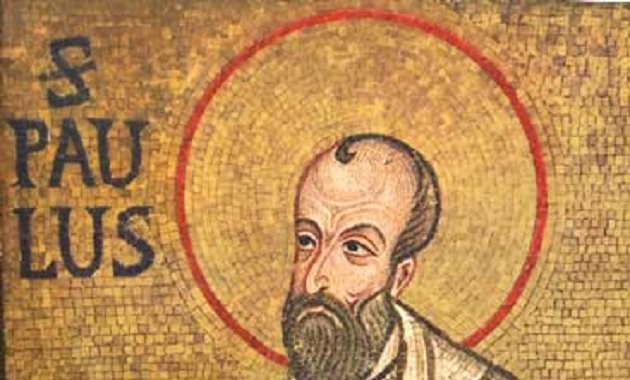
With the preaching of Saint Paul concerning Christ, a significant change began to occur in the Greco-Roman world in the middle of the first century A.D. The Jews of Thessaloniki were particularly annoyed by the activity of Paul and his associates and stirred up a mob, throwing society in the city into uproar. Thereafter they complained loudly to the local political authorities: “These people who have been turning the world upside down have now come here, as well… they are all acting contrary to the decrees of Caesar and saying that Jesus is another king” (Acts 17, 6). Unwittingly, by the use of this phrase, they recognized the already significant, and even more so the forthcoming, change in the world, ...
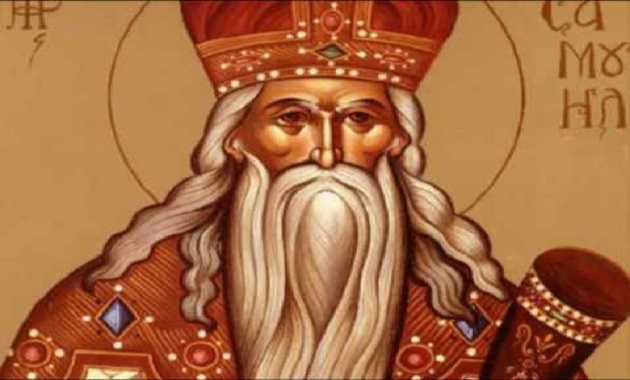
The Prophet Samuel, the last Judge of Israel, appeared on the stage of Biblical history towards the end of the period of the Judges, which, because of the lack of a king (“there was no King in Israel”, Judges 21, 25) was a chaotic period of intense political instability and of the introduction of foreign elements of worship into the Israelite religion. Samuel came from the small town of Ramah, and was dedicated, by his mother, Anna, who gave birth to him after a long period of infertility, to the sanctuary at Shiloh, the most sacred in the land of Israel. It was here that the Ark of the Covenant was kept, under the care of the priests of Eli, ...
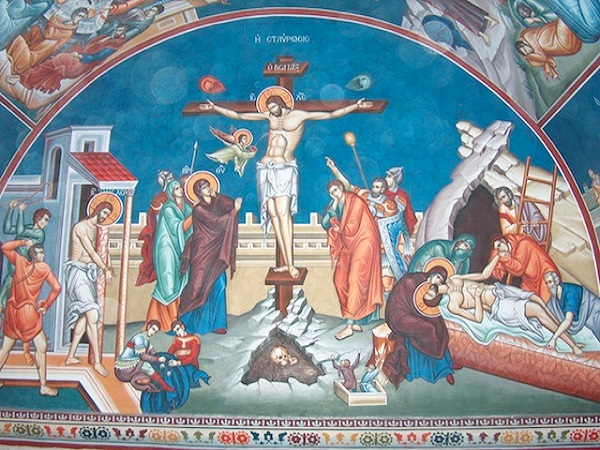
The perfection of Christ’s law-giving is hidden secretly behind His Cross, that is in our total sacrifice for the love we have for Christ and our neighbor.
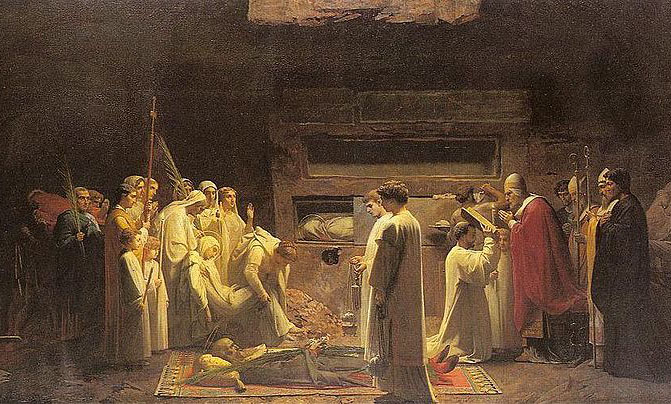
Fr. Alexander Schmemann, in his essay “A Meaningful Storm”, described the history of the Church as consisting of a series of layers. The earliest layer (and most fundamental, I would suggest) is that of the early church, a time of pagan persecution when the Church lived its life in the catacombs as a hounded and illegal sect. (Well, it lived in the catacombs metaphorically speaking—the Sunday service never was actually held in the catacombs, which were places of burial.) Then came the second layer, after the Peace of Constantine, when the first Christian Emperor called off the dogs of persecution and gave the Church a privileged place in the sun, beginning the long and glorious Byzantine experiment of Church-State symphonia. After about a ...
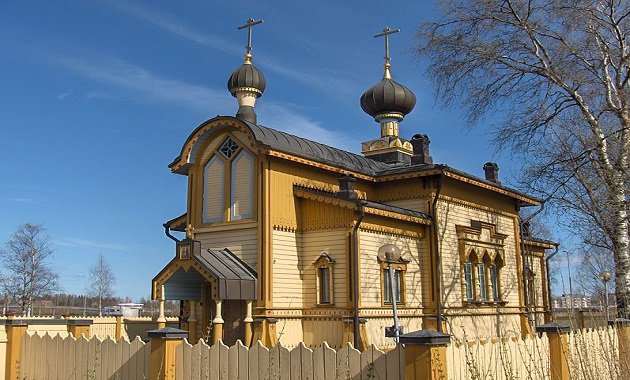
The Finnish Orthodox Church (Finnish: Suomen ortodoksinen kirkko; Swedish: Finska Ortodoxa Kyrkan) is an autonomous Orthodox archdiocese of the Patriarchate of Constantinople. The Church has a legal position as a national church in the country, along with the Evangelical Lutheran Church of Finland. With its roots in the medieval Novgorodian missionary work in Karelia, the Finnish Orthodox Church was a part of the Russian Orthodox Church until 1923. Today the church has three dioceses and 58,000 members that account for 1.1 percent of the population of Finland. The parish of Helsinki has the most adherents. Although it appears that the earliest Christians in Finland were Byzantines, most of the country received the Christian faith in the Latin tradition through the activity of ...
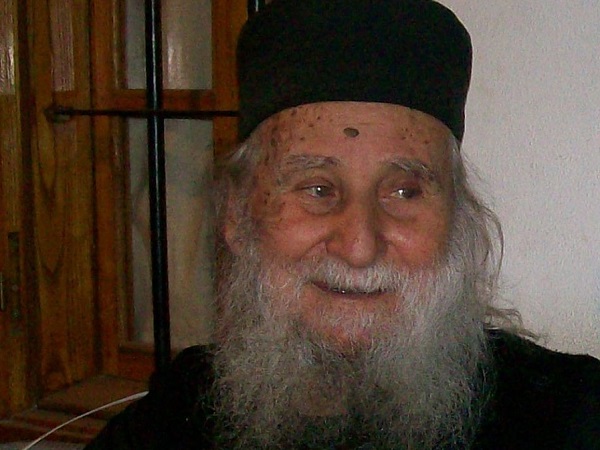
There are three ways in the spiritual life. The first is to have an illness. The second is to set about all your tasks cheerfully. The third is to have an Elder to whom you’re obedient. This last has something a bit more to it.
God’s love, which is one of His God-like attributes, is also the reason for the creation. Because for His consummate love, God wished to create beings to which He would pass on part of His Goodness and His Kindness. That’s why it is written that His created beings were “very good”. In summing up the teachings of the Holy Fathers of the Church, Saint John of Damascus writes on the reason for the creation: “Because, the Good and Most Kind God did not regard as sufficient the contemplation of Himself, but because of His excessive Goodness He took delight in creating beings which would benefit and participate in His kindness, has brought into being all creation- visible and invisible- out of ...
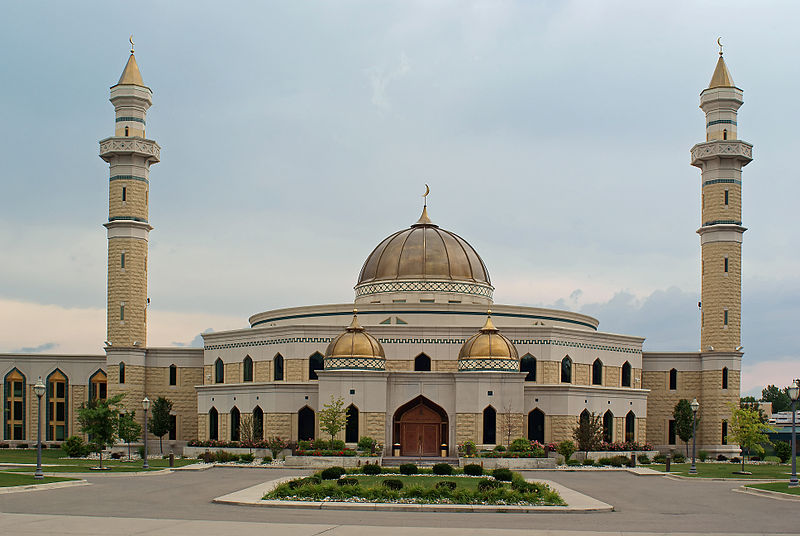
Mosque in Detroit The western world has entered a period of decadence and decline, departing far from her Christian roots. With the European Union denying the historical and cultural Christian heritage of her member states, a secular based world view reigns dominant. This, together with the mass immigration of peoples from Islamic countries at a time when the birth rates of indigenous peoples are at an all time record low, threatens the very existence of Western civilization. The naive would have us believe that we are living in an age of enlightenment, with borders falling, people uniting. They ignore the plight of the Coptic Christians of Egypt whose churches are being burned down in record numbers, young Coptic women being kidnapped ...
Do you want to live properly? Make sure you have humility, because without it there’s no proper life. People start being abandoned by God once they lose their humility. Love humility and you’ll never fall into one of the devil’s traps.
It is commonly agreed that the end of the second millennium after Christ was marked by a succession of events, by unexpected historical changes, which shook even those societies which traditionally had a sense of security and self-sufficiency. It is not possible to tell if people today are entering the historical era of the third millennium with any awareness, or whether events are progressing at such a rate that we are left trailing, in fetters, in the wake of a course which we are unable to influence. In the East and West today, there is a growing feeling of apprehension and, to a large extent, fear concerning the events that await us. The Alexandrine poet Constantine Cavafy would have said ...
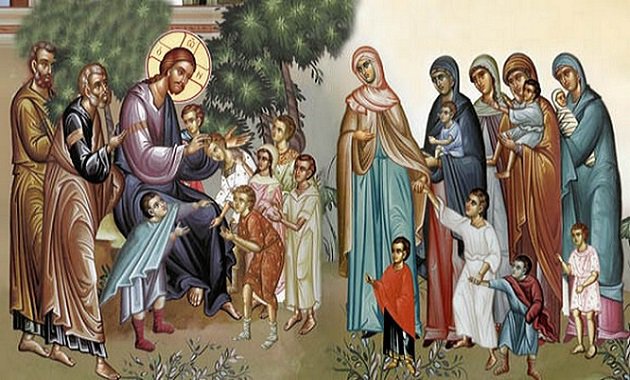
Obedience constructs and self-will destructs. A child has to learn to be obedient to its parents and to God. It’ll remember the words of its parents all its life and will always respect its elders, and not only those but people who are younger, too. It’ll be polite and careful with everyone. Unfortunately, there are very few families who bring their children up in this way. The spirits of evil provide a distraction in the minds of our children and they try to upset them. Children have to be taught obedience, especially before they’re five years old, because it’s at this age that their characters are formed. So the traces of the way their characters have been shaped will remain ...
B. ORTHODOXY IN THE NEW EUROPEAN CONTEXT 1. Relations between the Orthodox. Dogmatically, we Orthodox emphasize that we belong to the “one, holy catholic and apostolic Church”, that we are this Church. Certainly our Eucharistic conscience, the apostolic succession of our bishops and the structure of the Orthodox Church all guarantee its unity. It must be confessed, however, that every so often issues arise which damage it. On occasion, the situation worsens, not because of different theological positions but for other reasons which are not purely ecclesiastical. Quite a few Orthodox Autocephalous Churches lived in a homogenous setting, where they made up the overwhelming majority of the country (e.g. Greece, Romania and Serbia). An exception was the Ecumenical Patriarchate in Constantinople – ...
The time will come when people will behave as though they’ve lost their minds. And if they see somebody behaving reasonably, they’ll all gang up against that person and they’ll say: ‘You’re being absurd’. They’ll do this because that person won’t be like them.
Since we have determined that abortion cannot be sanctioned by oikonomia for reasons of rape, incest, "defective" fetus or "health" of the mother; and that the application of oikonomia is unnecessary in those cases where the life of the mother is actually in danger, the question which must be asked is: why would any Orthodox Christian, especially someone in a position of doctrinal authority and trust, choose to place a woman in spiritual and physical danger by counseling an abortion using the pretext of oikonomia (or for that matter, any other pretext)? Such a thing is analogous to deceiving a person with cancer and delaying acceptance of his condition until medical assistance is no longer efficacious. Indeed, the former situation is ...
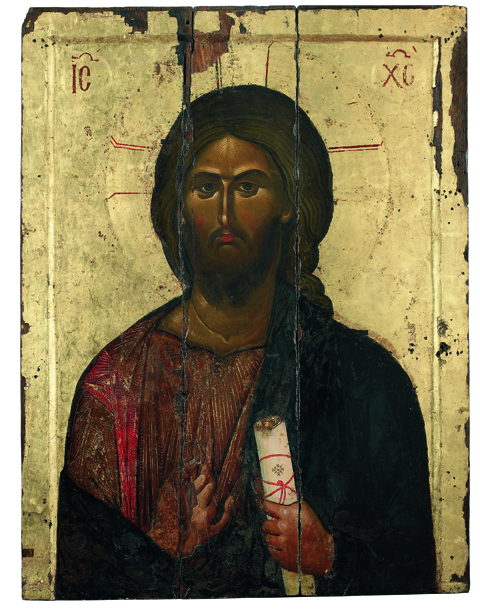
Christ, as the true and universal man, is the measure of all things for all people. He is the ultimate measure, universal and timeless, for the whole world. He is the true measure by which we can define or revise our spiritual quests. The universality of man is an expression of his catholicity, that is, of his status as an image of the True Being, Christ. In contrast, the universality proclaimed by those engaged in the destructive process of global unification obliterates man’s personality and restricts his freedom. Christ Pantocrator. Portable icon, 14th c. Vatopaidi Monastery. The rapid rate at which globalisation is currently taking place focuses attention on one of Christ’s essential characteristics: His universality. Christ’s universality comes into focus ...
If Moses was excluded from the promised land over a single word, how much more will our big, sharp tongue deprive us of the Kingdom of Heaven, since the Lord says we’ll have to account for every empty word we utter?