And when I sometimes see people going to make a disaster of their lives, there’s nothing I can do. I show them a little, but they don’t understand. It’s not right for me to intervene too much. It’s not a simple matter.
This certainty of the vision of God was a constant in the tradition of the Church; all the spiritual struggles of the great ascetics and saints were directed towards making them able, from now, to see the light of divine glory, as the righteous will do in the last times. There was always an awareness that the light of the Transfiguration and that which shines upon the saints is the same as that which will dawn upon the righteous at the last judgement. And so the spiritual life is not a suspended expectation, with no guarantees, of purely future and promised benefits, but the enjoyment of these good things in the here and now. This explains the strength and endurance ...
Manoah at first believed that the Angel of the Lord was just a man, perhaps an angel or a prophet of God, but after the Angel ascends into the flame, he and his wife fall to the ground in fear and awe, and Manoah exclaims, “We have seen God!”, and like Jacob, associates seeing God with death. This is reminiscent of God’s words to Moses in Exodus. “You cannot see my face, for no one can see me and live… you will see my back; but my face must not be seen.” (33:20, 23). The accounts of the Angel’s appearance to Moses on Sinai suggest that the difference between Moses’ encounter with God and that of others who see the ...
People who don’t know God are stupid and the light of knowledge hasn’t yet enlightened them They’re the most unhappy of people. They live unhappily and approach death without hope. The grave is a constant source of terror for them.
True Beauty What words can describe the magnitude of the damage done by the failure of the effort to know God? What more can your intellect conceive of? How can you manifest and describe the ineffable in words, and that which is beyond conception by the intellect? But if the eye of your intellect is so well cleansed that you can somehow see what Christ promises in the Beatitudes, you’ll scorn all human discourse, because it’s unable to express what you think. But if you’re still bound to the bodily passions and have the eyes of your soul closed, as though from illness, because of your impassioned condition, then the whole power of rhetoric is of no avail, for that very ...
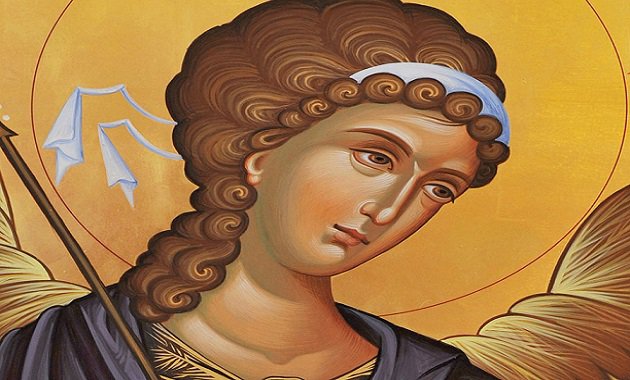
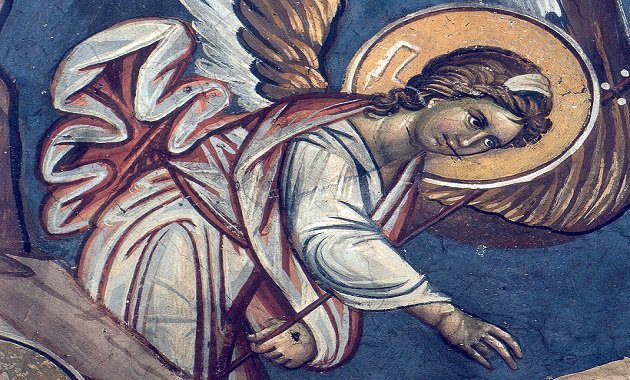
The God Of The New Testament In The Old Testament “As the flame blazed up from the altar toward heaven, the angel of the Lord ascended in the flame. Seeing this, Manoah and his wife fell with their faces to the ground. When the angel of the Lord did not show himself again to Manoah and his wife, Manoah realised that it was the angel of the Lord. “We are doomed to die!” he said to his wife. “We have seen God!” (Judges 13:20-22) In my previous article, The Burning Bush, we examined the manifestation of the “Angel of the Lord” or the “Angel of Great Counsel” in the Burning Bush on Mount Sinai. As we saw, when this particular ‘angel’ appears, ...
Goodness is the Lord Himself, whatever originates from Him and all that surrounds Him. Goodness was also found in the human nature before the fall and afterwards in the reform of sanctification. Goodness is also the essence of what is right and what is rational and is found in the relationship between them. It is the complete absence of irrationality, wickedness and perversion. On the other hand, evil is the perversion and the absence of whatever we have described as goodness. Whatever originates from evil comprises the elements and parts of death, the very same “body of death”, whose father and supporter is the devil and his numerous servants. On the one hand, goodness has an existence and essence, because it is ...
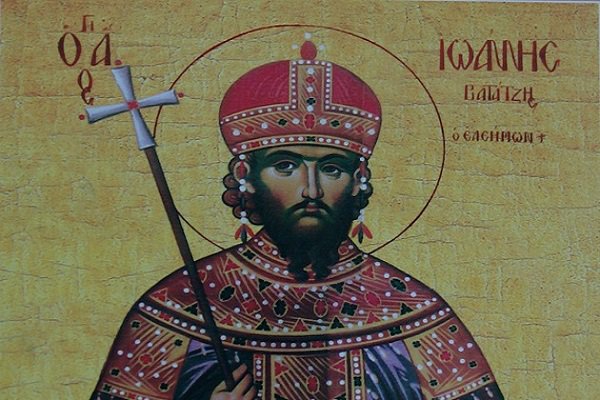
On 4 November, our Church honours the memory of an outstanding personality of the Middle Ages in Greece, the emperor Ioannis Vatatzis. Ioannis came from a well-known Byzantine family which had given many exceptional members to the political and military life of the Empire. He himself was born in Adrianoupolis. His parents died when he was still young, leaving him the master of great possessions. He chose, however, to them away to the poor and to churches, and to go to Nicaea, in Bithynia, which was, at that time, the seat of the Empire, Constantinople having been taken by the Franks during the Fourth Crusade (1204). Here he met his clergyman uncle, who was a close adviser to Emperor Theodoros (Laskaris). ...
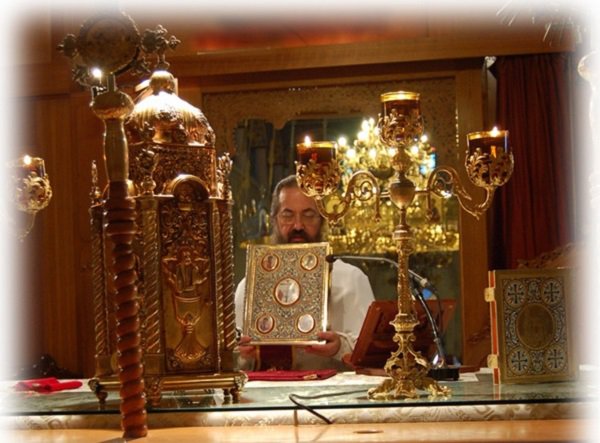
The beginning and the Litany of Peace The priest lifts up the Gospel, makes the sign of the cross with it over the altar and says in a loud voice: ‘Blessed is the Kingdom of the Father, and of the Son, and of the Holy Spirit, now and for ever and to the ages of ages’. The choir, or the people, reply ‘Amen’- (May it be so). Then the priest- or the deacon if there is one- begins to say the Litany of Peace. He encourages us to pray to God with the words: ‘In peace let us pray to the Lord’, and we submit our supplications regarding our salvation and also our everyday life. We entreat God to grant us health, ...
When you hoard more money than you need, the slightest breeze, a temptation in your life, will be enough to sink the ship with all hands. But if you’ve got only what you need then even if you’re caught in a violent storm, you’ll be light enough to ride the waves.
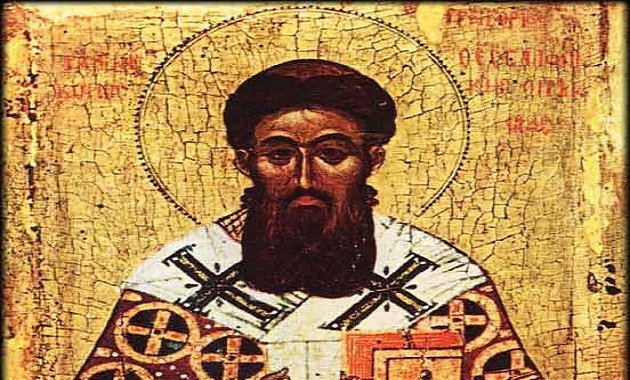
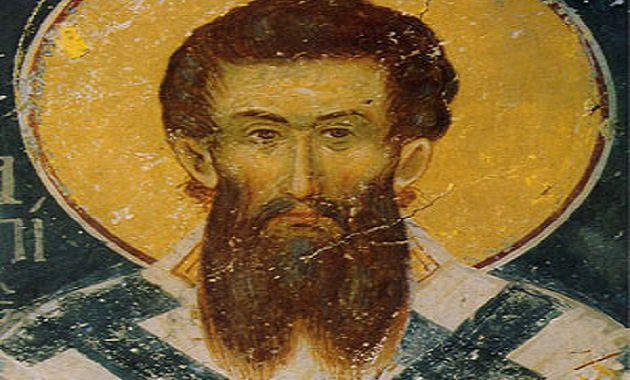
The endeavours and teaching of Saint Gregory Palamas were directed at ensuring that people could enjoy the possibility of participating in God, at demonstrating that God is not merely completely transcendental and beyond involvement but is also here with us in the world and welcomes our involvement with Him. Gregory correctly saw, in Varlaam’s views, the renewal of the theological heresies of the 4th century, those of Evnomios, Areios, and Makedonios, who, by accepting the Son and Holy Spirit as creations, deprived people of the chance of glorification . Because how could They glorify people if They Themselves were also creations and in need of deification, as Gregory the Theologian so succinctly and provocatively says about the Holy Spirit: “unless ...
People are free and autonomous and can decide on matters pertinent to their lives and even as regards their death. According to the Church, people are an image of God, autonomous, certainly, but only in terms of their relationship with others. Our freedom has to do with our relations within society. The Church accepts euthanasia only when it comes from God, not from people themselves* ‘Our life is God’s greatest gift and the beginning and end are in His hands alone: “In the hand of God is the spirit of every person” (Job 12, 10). It is the locus in which our self-determination finds expression, where we encounter the grace of God through our free will and where our salvation is ...
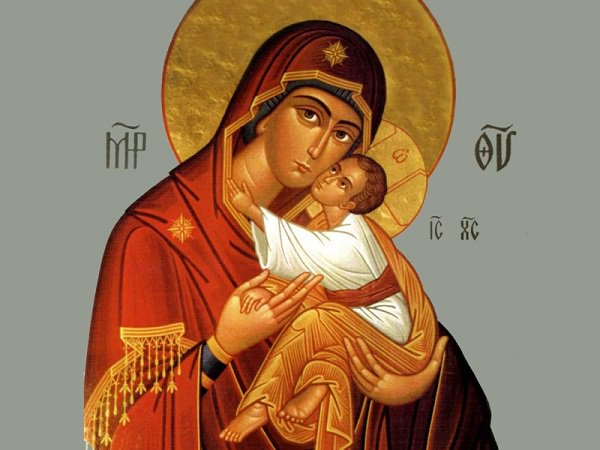
Mary of Nazareth has been given many titles over the last two millennia. She is called the Virgin Mary, Theotokos (Greek: “Birthgiver of God”), Panagia (Greek: “All Holy One”), the Blessed Mother and Our Lady to name a few. No other woman has achieved such enduring fame and influence than has Jesus’ mother Mary. Through eyes of the world, Mary is a historical curiosity. Through the eyes of the Christian however, Mary is the preeminent follower of Jesus and an example to all believers. Everything she does and says points to her Son. A Life of Virtue Early on in the New Testament, we see Mary’ as the paradigmatic “handmaiden of the Lord.” Mary’s cousin Elizabeth greeted her while she was pregnant saying, ...
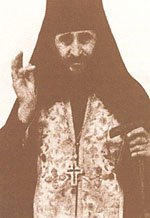
The blessed Elder George came from the Black Sea and was orphaned and left on his own very early in life. After being persecuted and imprisoned by the atheist regime in Georgia, he came to Greece where the humble man lived with such asceticism and zealous faith that he was granted the gifts of discretion, perception, precognition and prophecy. Father George was born in Argyroupolis (Gümüşhane), in the Black Sea region, in 1901. He was orphaned at an early age and his upbringing fell to his devout grandmother. After the death of his grandmother and sister, he and his grandfather left for Erzurum in Greater Armenia. The death of his grandfather and the abuse of his brother took him to the ...
It’s the evil demons who make crafty siren calls to our soul. These calls are the compelling expressions of our impassioned thoughts, feelings and desires. But the soul can escape them since it can always find refuge in the Lord.
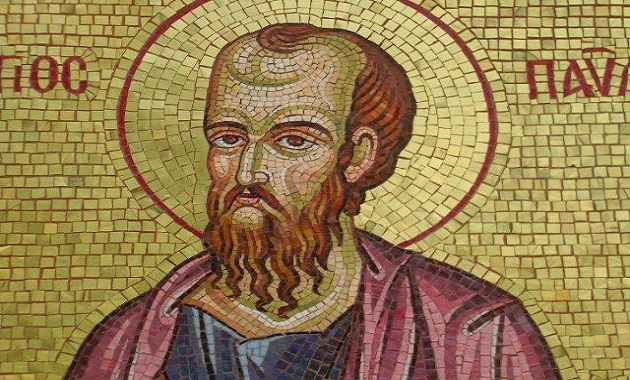
(Saint John Chrysostom: In Praise of the Holy Apostle Paul, III) Demonstrating the power of human will and the fact that we can fly even to the heavens themselves, leaving the angels and archangels and the other powers, Saint Paul urges believers to become imitators of Christ, sometimes through him (“Become imitators of me, as I am of Christ.”) and sometimes without him (“Therefore become imitators of God, like beloved children.”). Then, in order to show that nothing befits this imitation so much as living for the common good and looking out for what is useful for each other he adds: “Behave with love”. This is why, when he said “Become imitators of me”, he immediately speaks of love, demonstrating that it ...
But so as not to fatigue your mind in vain by gazing out over the infinite, we’ll desist from poring over the nature of God Who lies beyond, because it’s impossible to understand Him. From what we’ve looked at, we’ve formed some sort of notion of His greatness, but all we’ve really gained is the knowledge that we’re unable to understand much else. And the more superior we believe the nature of God to be to our knowledge, the greater our sorrow is, because the summum bonum, from which we’ve been separated, is so great, and is such that we can’t bear any real knowledge of Him. And yet, sometimes we find ourselves in such close communion with God that it ...
Saint George, the new martyr of Christ, lived in the city of Neapolis of Cappadocia (now Nev-Shekir in Turkey) in the eighteenth century. He was a priest at the Church of the Dormition of the Theotokos and served his flock with righteousness and holiness as a true servant of the Most-high. Gifted with the qualities of love and meekness, brotherly love and forbearance, humble and spotless was his support and consolation of the Greek Christians who then lived under the yoke of the Turks. As an angel on earth the divine George willingly served his fellow men cultivating the divine gifts and pleasing to God. In the year 1797 he was invited to the village Malakopi, located within six hours from Neapolis, to serve ...