When we find ourselves in the tempest of sorrows, what we should ask for isn’t for our senses to be dulled, nor for some method of making us immune to feeling, but the art of accepting and patiently bearing any sadness. Saint Makarios of Optina
When we find ourselves in the tempest of sorrows, what we should ask for isn’t for our senses to be dulled, nor for some method of making us immune to feeling, but the art of accepting and patiently bearing any sadness. Saint Makarios of Optina
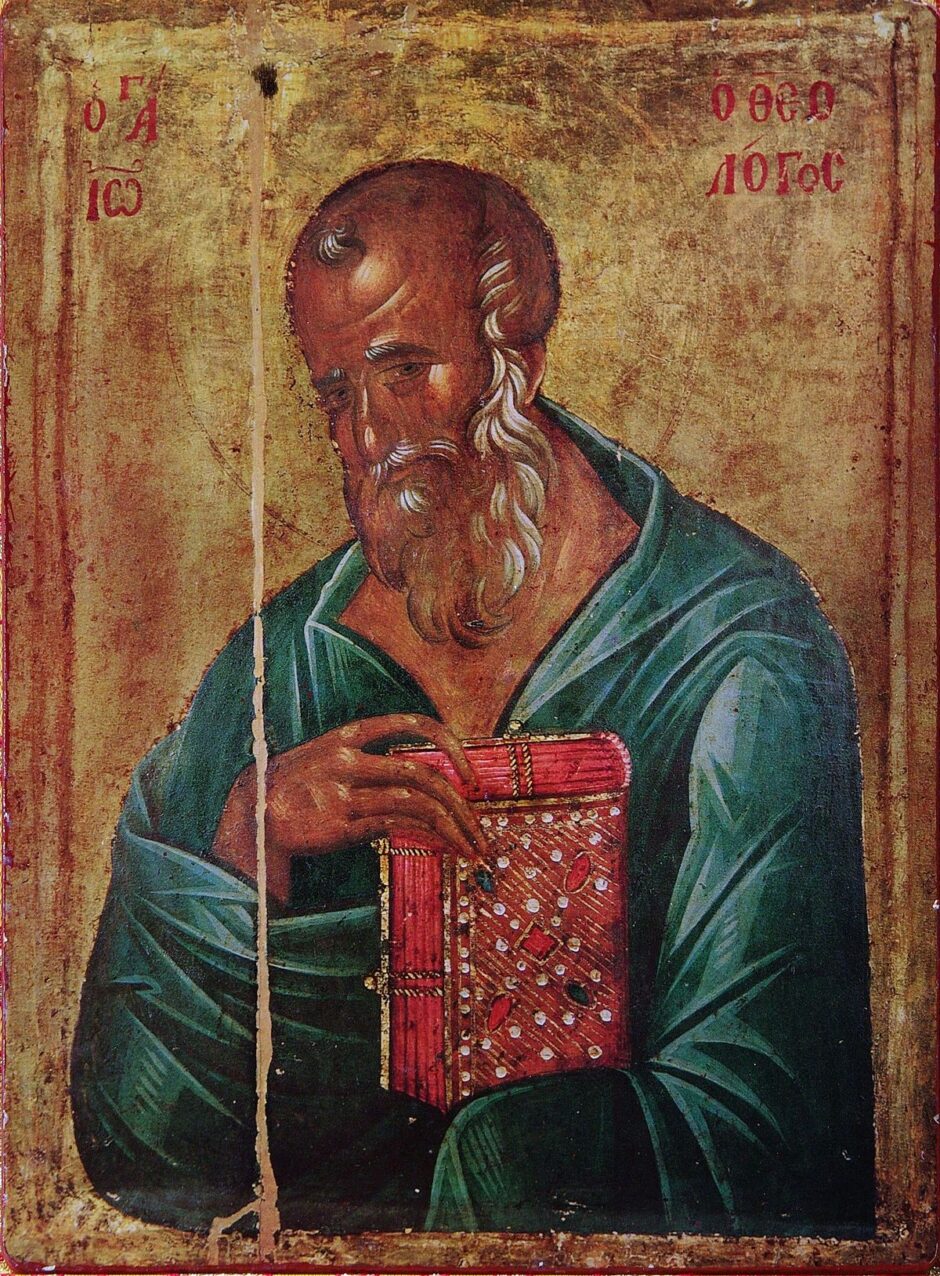
a) Theology, as discourse concerning some god, can be found in a variety of religions, even primitive ones. In ancient Greek thought, a theology developed which was founded on human discourse. But Christian theology, as the experience and record of personal communion with the God of Christian revelation, who ‘appeared in the flesh,was vindicated by the Spirit, was seen by angels, was preached among the nations, was believed on in the world, was taken up in glory’ (1 Tim. 3, 16), is entirely different. This is a spiritual event of a different order. b) Although many holy Fathers and ecclesiastical writers have written important tracts, only three have had the designation ‘Theologian’ attributed to them: Saint John the Theologian, bosom friend ...
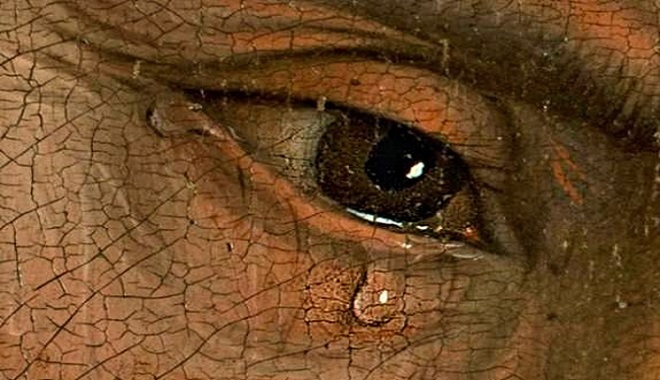
‘My beloved, God has no need of tears nor does he want people to mourn from the pain in their hearts. Rather, he wants us to rejoice and be glad out of love for him’ (Saint John of the Ladder, Discourse 7, 45). You hear and read that the Lord blesses those who mourn. Over their sins and the sins of the whole world. You see the holy Fathers doing the same: they all stress the necessity for tears and mourning in the spiritual life. But don’t think that this is so because God enjoys our generally mournful condition. If that were true, God wouldn’t be who our Lord Jesus Christ revealed: God the Father, with boundless love for us. Instead, ...

There are qualitative degrees in the way in which we share Christ’s peace. In the end, we can reach the point where we, too, can become peacemakers, as was Christ. In this way we confirm Christ’s beatitude: ‘blessed are the peacemakers, for they shall be called the sons of God’. Elder Efraim Vatopaidinos

The spiritual life is realized through faith, but faith is confirmed through deeds. If you want to defeat the demons, you have to give way in the face of other people’s wickedness. Has someone insulted you? Ignore it and then peace and calm will return and they’ll stop you feeling upset. Saint Seraphim of the Monastery of Glinsk
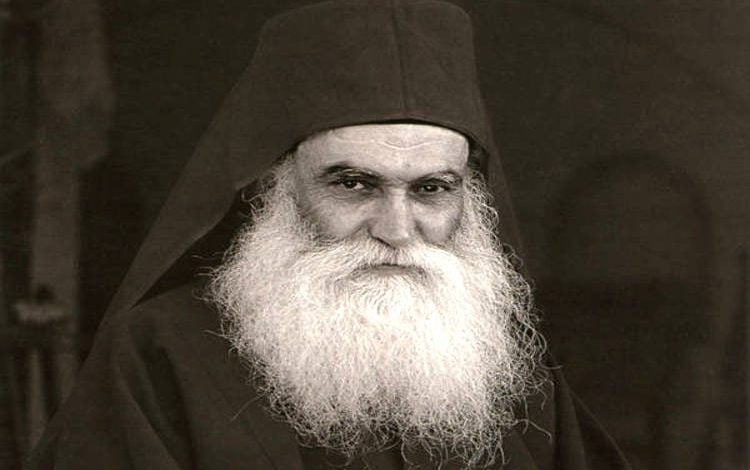
The saints faced sorrows, trials and temptations with patience. They never asked to be given a break from them and so they gained their reward in heaven. Saint Efraim Katounakiotis

Many people take communion once a year; others twice; others more. Which of them should we applaud? Those who partake once a year, many times or a few? Neither those who take communion once nor those who do so frequently, but those who approach the Holy Chalice with a pure heart and an irreproachable life. People like that can take communion all the time. Saint John Chrysostom

Among the choir of the saints of the new martyrs of our Church, there are a number who are called ‘Hagarenes’*. These were Turkish Muslims who, during the time of time of Turkish rule in the Balkans, embraced Christianity and proved themselves faithful enough to undergo martyrdom. One such is the holy new martyr, Ioannis ‘of the Hagarenes’, from Vrahori, a Turk by descent, son of a famous sheikh of Konitsa**, a dervish, who was the religious leader and teacher of the region. He was born in about 1790 in Konitsa and was named Hasan. His rich and noble father ensured that he knew the principles of Islam and he studied under the finest available Islamic scholars. He was then sent ...
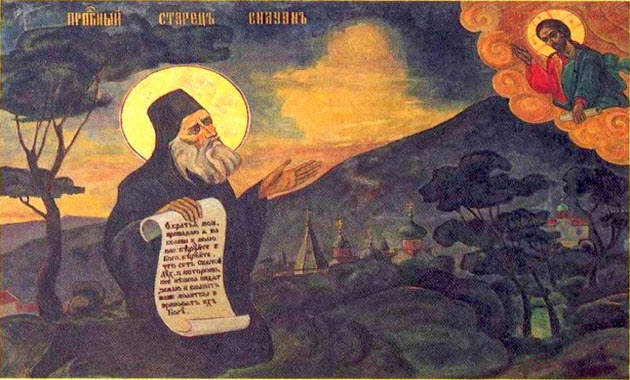
Christ is the miracle that astounds us. He is the sign that God gave to all generations of all times. In His Person, every problem, every impasse, every tragedy received its solution. Being imitations of Christ and bearing Him in their heart, the saints are also the sign of God for their generation. They become tangible examples of the love of God in a world plunged into the darkness of ignorance and despondency. Through their word and prayer, the saints give an answer to the questions of their contemporaries and a solution to their problems. It is rather God Himself that speaks through His closest friends, which are the saints, to every generation. And it is this word, coming either directly ...
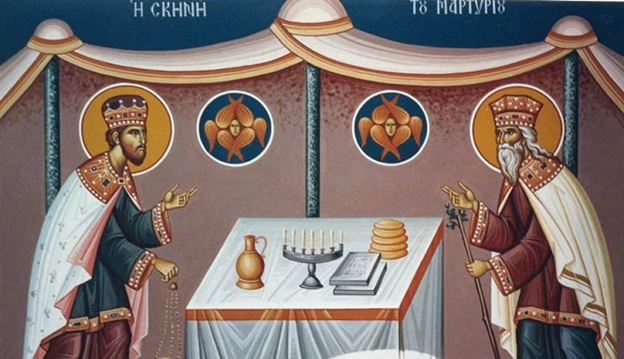
The concept of priesthood exists in the Old Testament, though it has a significance and character that is different from that which it assumes in the New. In the Old Testament, before the time of Moses, every head of a family could offer sacrifices to God and there is no lack of instances where this happened, such as when Noah performed a sacrifice after the flood in gratitude to God for his survival (Gen. 8, 20). There were, of course, priests at that time, but their task was less to perform sacrifices than to teach legal requirements, pronouncing ritual blessings and serving the ark of the covenant, which was called ‘guardianship’. The institution of the priesthood was established essentially at the ...
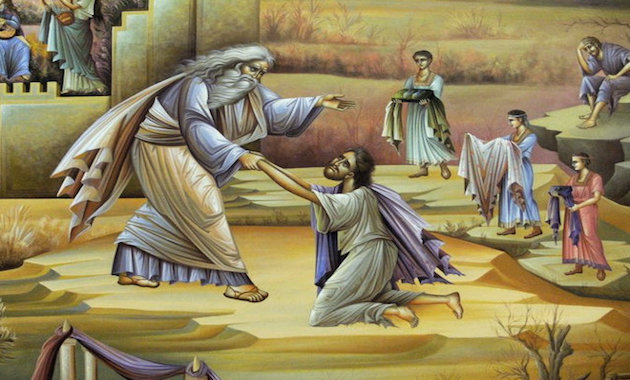
In their struggles, Christians can’t employ means that are alien to love. If you want to combat evil with evil, in reality you’re doubling it. According to the saying of the Fathers: ‘If good be not done well, it is not good’. Elder Georgios Kapsanis

Knowledge is power and love is the aim; when they go hand in hand we have a wonderful result. ‘Knowledge puffs up whereas love builds up’ (1 Cor. 8, 1) and Saint Maximos the Confessor urges us to: ‘yoke together knowledge and love and you’ll become humble in outlook, a spiritual constructor, building up both yourself and all those you are in touch with’ (ΕΠΕ 14, Thessaloniki 2006). The holy Father analyzes the issue with great clarity: ‘Love builds up because it isn’t envious, it doesn’t embitter those who do display envy, nor does it deliberately make a public show of the person being envied. People who love don’t think they’ve arrived at perfect knowledge (Phil. 3, 12) and they ...
Often when we go to sad events, we all say, with the best will in the world- and we’re partially right- that it’s God’s will. And, of course, if we can understand properly, those are, indeed, words of comfort, words that give us strength. Since it’s what God wants, since God decided this was to happen, we trust in his providence. But to be precise, these words aren’t strictly true. God doesn’t want these things to happen. God doesn’t bless them. He knows about them, but doesn’t want them. They can’t be identified with God, with his will or his knowledge. God knows everything. What we have to know is that God isn’t the cause of our evils. The cause of ...
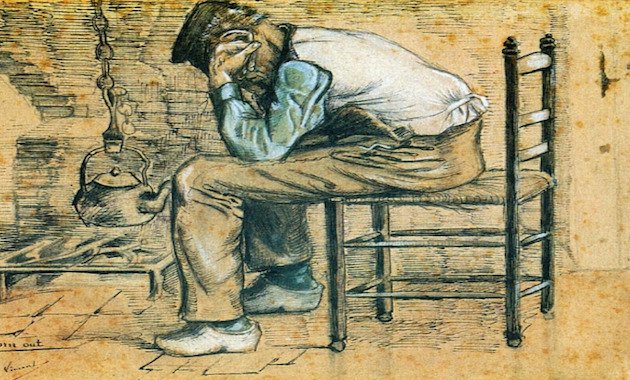
From the moment you have two gods, you should know that one of them is the devil. And you can’t serve both God and the devil. Saint Nikolaj Velimirović, Bishop of Ochrid

We live among people who are imperfect, with lots of passions and faults which are likely to irritate us enormously and make us upset. But we can’t change the way they behave, particularly their negative attitude towards us. Nobody changes their own disposition unless they want to. We can see this from ourselves. We might not express our anger, our discontent, our ill-will, our rejection and any other negativity we feel towards another person, and this can be effective, even if it involves repression of these feelings. But no-one can say that we can’t have them in our heart, nobody can forbid it, and no-one can make us any different, unless we wish to be so. The notion that other people are ...
The great martyr for Christ Eustace (Eustathios) was a solider of renown in Rome at the time of the Emperor Trajan in about the year 100, and was known as the most acclaimed of all for his virtue, courtesy, disposition, charity and sympathy towards the poor. He had previously been called Placidas and his wife was Tatiana. When he was still enslaved to the delusion of the idols, because of his great devotion and nobility, he was deemed worthy of being called to the faith by God, as Saint Paul had been. This happened because once, when he was hunting a stag and had drawn quite close to it, he saw, between its antlers, the precious Cross, which was shining more ...
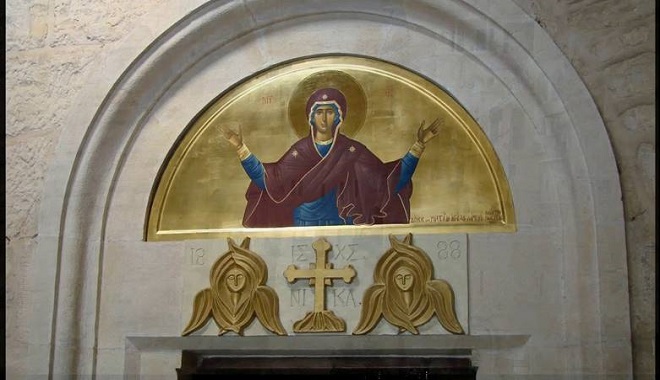
In our narration of the miracles of our glorious Lady, full of grace, the Mother of God, we shall draw some drops from the boundless sea, to the honor of the all-praised Mother of God. 1. No woman had ever entered the Monastery of Choziba. This is the reason why they were later allowed to do so. There was a certain noblewoman in Byzantium, who suffered from an incurable internal illness and, though she spent a great deal of money, she suffered worse than before. She therefore decided to go from Byzantium to the holy city, in order to pray. She reached Jerusalem and, having venerated the holy sites, she then went down to the River Jordan. She continued to pray ...
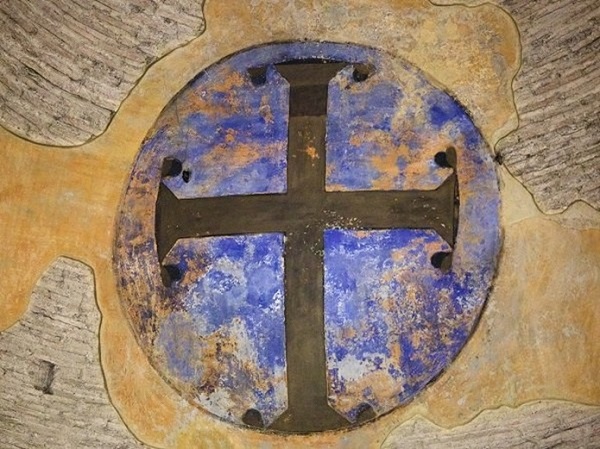
‘Let those who desire to come after me deny themselves, and take up their cross and follow me’ (Mark 8, 34). A few days ago, our Church celebrated the universal elevation of the honorable and life-giving Cross; and today, the Sunday after the Elevation, the Gospel reading reminds us of the importance of the Cross in our lives. Because, although Christ ascended the Cross for our salvation and although his Cross is a symbol of strength and hope for all those who believe in him, theoretical faith isn’t enough; practical proof of this faith is also required. This is achieved in the manner indicated by Christ in today’s Gospel reading, when he says: ‘Let those who desire to come after me ...

Judging other people has more snares than people can even imagine. Idle talk, derision, ridicule, complaint, lies, and so much else besides. All the great evils and mortal sins start with judging others. Abbess Makrina, Holy Monastery of the Guide, Portaria
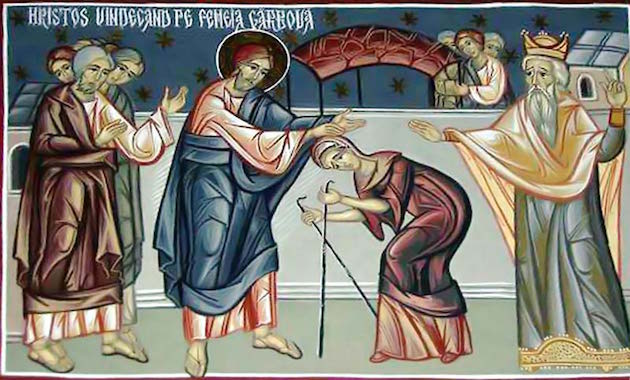
God takes care of humble people who have learned the great lesson of leaving everything in God’s hands. But they’ve also learned that, if you do leave everything up to God, he doesn’t remain inactive: he undertakes the responsibility for everything. And the works of God are much more significant and important than our own. Metropolitan Athanasios of Limassol