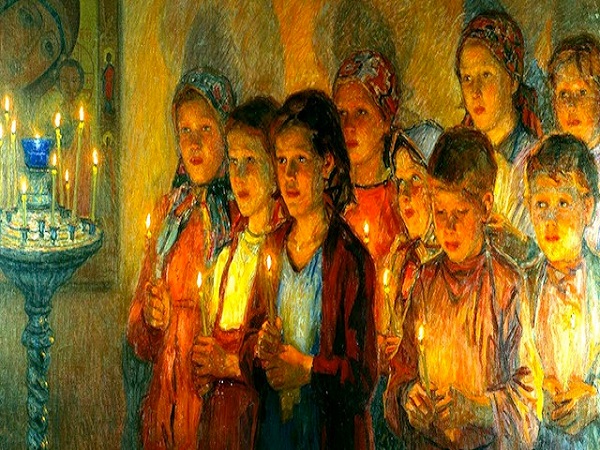
So if, from the beginning, from their first steps, we keep children away from evil and lead them along the best path, then being devout will be like a habit for them and second nature. They won’t then willingly or easily turn to evil, because their habit will help them to do good deeds. So for us they’ll become more revered than their elders and more useful in public affairs, since, from their youth, they’ll display the virtues of their elders.
Having now examined oikonomia in relation to the so-called "hard cases" of pregnancy due to rape, incest or that which threatens the life of the woman, as well as that which will result in the birth of a "defective" child, the question still remains: is there a place for oikonomia in the abortion question? In practice, oikonomia is presently being applied in this situation. The Orthodox Church today asks of those who are involved with abortion only sincere repentance and a change of heart and mind in order to be received back into the Community of the Faithful. The ecclesiastical penance of ten years excommunication as directed unchanged, in the Canons, is very rarely, if ever, required of those who ...
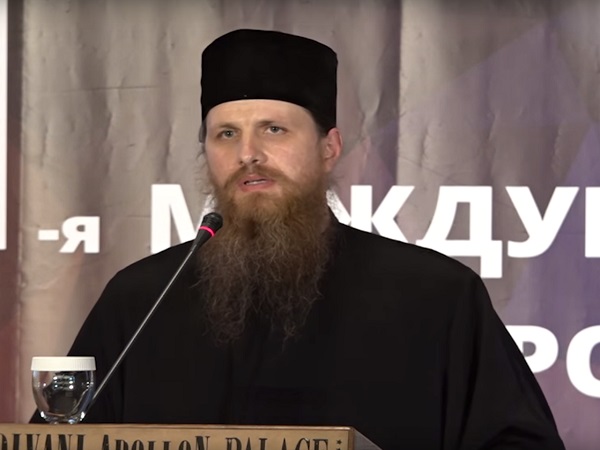
As time went by, he acquired spiritual children in Athens, too, particularly among people who had moved from Thessaloniki. He took care of them, as well, going down usually once a month for confessions and holding a vigil at the same time. To these few were added genuine Athenians and his arrival was soon eagerly awaited. In order to celebrate in another diocese, such as Athens, he needed the canonical permission of both bishops, Thessaloniki and Athens. I approached the then Metropolitan of Thessaloniki, the late Panteleïmon II, with whom I’d been friends from our time as students together, and he gave his permission. When I asked the late Archbishop of Athens, Serafeim, he said in his typical manner: ‘You’re asking ...
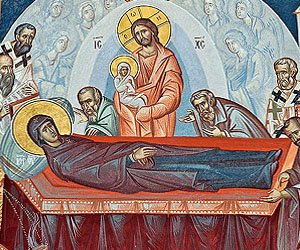
Our Most Holy Lady, the Ever-Virgin Mary is a wonder and mystery which not even the angels can understand: “Heaven was astonished and the ends of the earth amazed, for God appeared bodily to mankind, and your bosom became broader than the heavens. Therefore, Mother of God, the leaders of the orders of angels and of men magnify you”, writes the poet of the Paraclitic Canon. She is, as Gregory the Theologian says, “God after God”. Of course, the Fathers also refer to her position elsewhere, clarifying it: “Let Mary be held in honour. Let the Father, Son and Holy Spirit be worshipped, but let no-one worship Mary”, (Saint Epifanios). Regarding the genealogy of Our Lady, we’re told in the Gospel ...
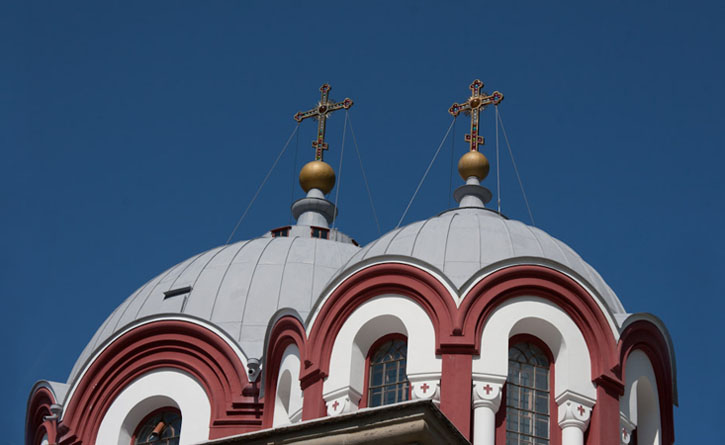
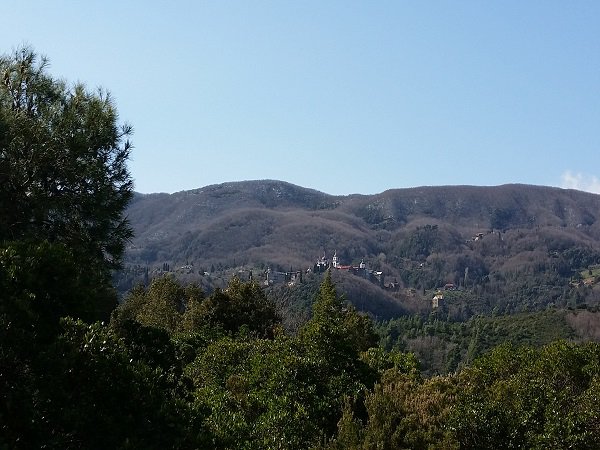
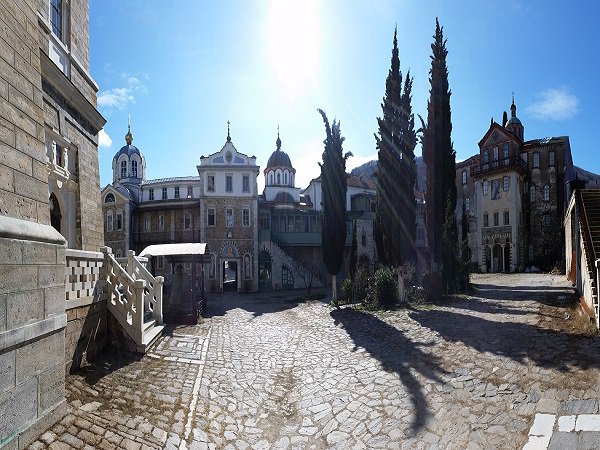
This summer ten Norwegians were granted an audience at The Holy Mountain, the last remaining part of the Roman Empire. The monks who live here tell stories of miracles and wonders as a normal part of everyday life. Mount Athos has been called the one place on planet earth that has changed least over the centuries. The Orthodox monks who dwell here, live as they did during medieval times, praying and working. They come to dedicate their lives completely to God, and the last thing they want is for the hard-to-reach peninsula to become a tourist attraction. Nevertheless, the monastic republic in northern Greece has a remarkable pull on people from all over the world. When the famous CBS news magazine ...

The attack which took place in the church of St. Etienne du Rouvray, in Normandy came as a reminder, unfortunately, of the religious character of the extremist terrorism which has been targeting Europe. The terrorists acted under the umbrella of the Islamic State, which has claimed responsibility and they slit the throat of an 84-year-old priest, while holding hostage nuns and members of the congregation who were attending Mass. The incident ended with the intervention of the French authorities who neutralized the perpetrators. The Islamic State and the groups of the network of Islamic extremism in general have never hidden the fact that their activities are of a religious character. With a distorted interpretation of Islam orientated towards violence, they have ...
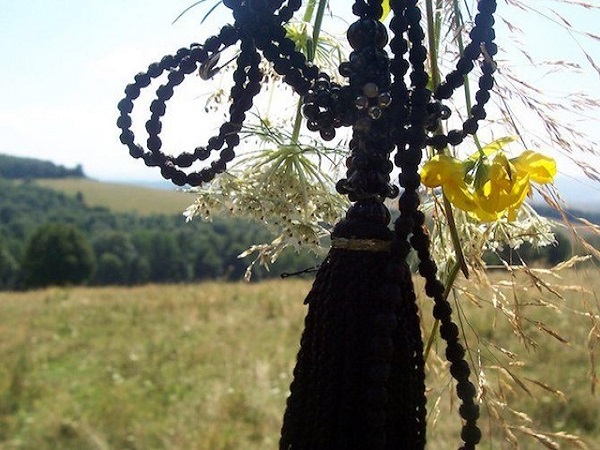
Chase the ‘prayer’ as those people do who are looking for a pearl. Without the ‘prayer’ Christ isn’t in the heart. The ‘prayer’ is what’ll teach you to love Christ.
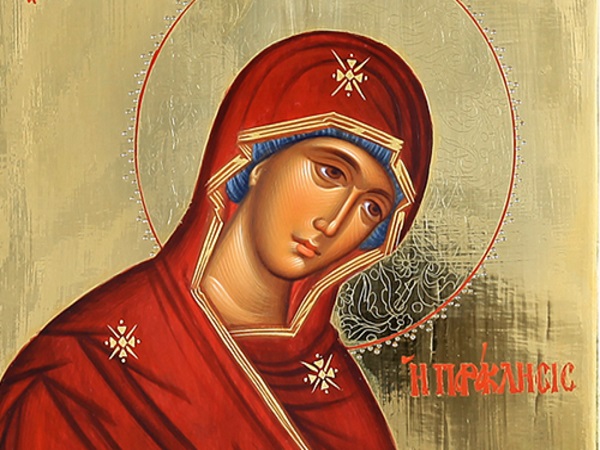
In the Divine Liturgy of Saint John Chrysostom celebrated in the Orthodox Church, the priest repeats the following prayer a number of times: Let us commit ourselves and one another, and our whole life to Christ our God. The ecclesiastical year, which begins on September 1st, has been divinely developed by the Church Fathers with feasts and fasts to aid our life in the God-Man Christ. The longest and strictest fast, Great Lent, paves the way for Pascha (Easter), the Feast of Feasts. In addition to Lent, there are three other periods of prescribed fasting: that of the Apostles in June; the Dormition; and, that of Christmas in November-December. The One, Holy, Catholic and Apostolic Church is presently observing the Holy Dormition Fast; ...
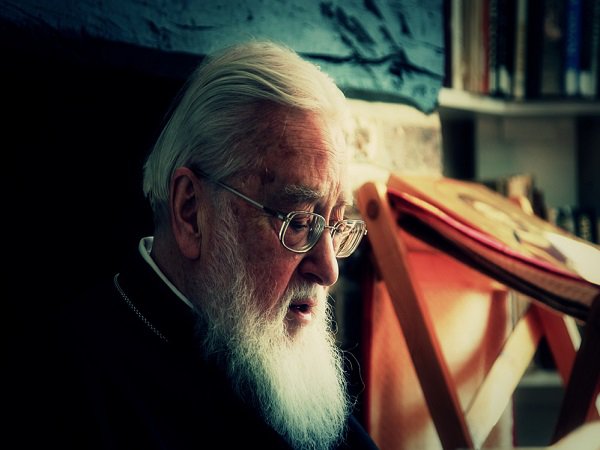

(Talk in Irakleio, at an event sponsored by the Holy Archdiocese of Crete, in the presence of His Eminence Irinaios, Archbishop of Crete) Our subject today is an impressive contradiction in people nowadays. In particular, what we shall be concerned with is people’s willingness to become dependent at the very centre of an era when so much effort has been expended on the acquisition- and now enjoyment- of the triumphant declaration of our independence! What is paradoxical is the fact that the more we progress with our external independence from binding conditions (tyrannies of all kinds), the more ways are found of constraining our internal freedom. In my view, it is a help in studying the phenomenon of addictions to see ...


To be quiet is the fruit of a royal and noble upbringing. Those who’ve learned how to be quiet have also learned how to talk. Because to be quiet is the product of rational thought. In the same way as speaking prudently is. People who don’t know how to be quiet can’t hold a conversation, either.

On seeing Fr. Symeon, in person you weren’t impressed by his appearance. He was an ordinary clergyman and he himself cared nothing for anything more. Often, indeed very often, he would stress that he was a ‘non-being’, clearly referring to the phrase used by Saint Paul in I Corinthians (1, 28), where he talks about ‘things which are not’. And he believed this deeply and demonstrated it by his behaviour. Although he had a great many spiritual children, he never said of anyone ‘He or she’s my spiritual child’. He rejected the title of ‘Elder’. Some professors went to see him once with a group of students, in the first few years after the monastery had been built. One of ...


The Scriptures have a low door. If you want to enter, you have to be either a child or you have to bow your head humbly.