Don’t try to learn about the sly and wicked things that people do, because then your soul’s transformed by what you hear.
Don’t try to learn about the sly and wicked things that people do, because then your soul’s transformed by what you hear.
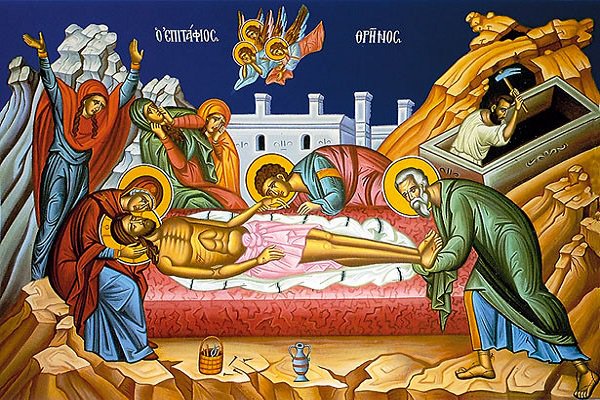
In the event of death, we usually attempt to rationally explain its happening or to provide a sense of meaning for it through logical interpretations. We compose philosophies, preach theologies and after that, to fill in the gaps of what cannot be explained, we exorcise death with folkloric or religious rituals. For when one tries to deal with the death of a child using these means, all of these interpretations and exorcisms seem inadequate, if not senseless, especially when we use them to comfort the grieving parents. According to Dostoevsky, it is dangerous, if not a crime, for one to use logic to explain or justify the torture or death of a child. In Brothers Karamazov, Ivan resists every attempt in ...
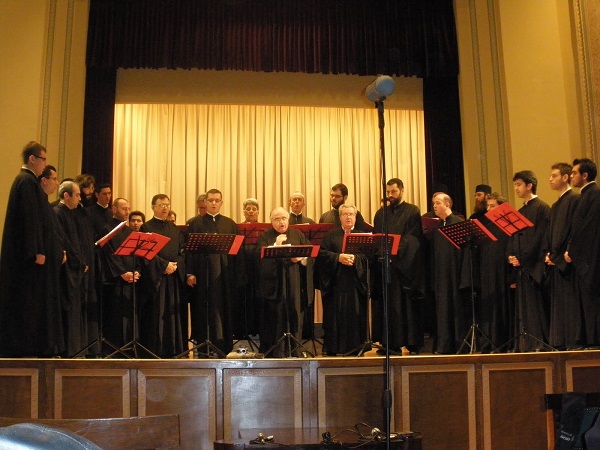
From a recording of a concert of the Greek Byzantine Choir in Patras on 3/11/2006. The setting is by Konstantinos Pringos and the piece is sung by Panayiotis Koutras, the Protopsaltis of the church of Our Lady Myrtidiotissa, Alimos. %audio%

If, brethren, we remembered the words of the holy Elders, if we studied them, it would be difficult for us to sin, difficult to neglect ourselves. Because, precisely as they’ve advised us, if we refuse to ignore the little things and what appear to be insignificant, then we won’t fall into greater and more grievous sin. I’m always telling you that when we say about little things ‘What does this or that matter?’ we’re forming a bad habit in the soul, which then starts to pay no attention to things that matter greatly. Do you know what a great sin it is to judge your neighbour? Really, what’s worse than this? What can God hate and abhor as much as ...
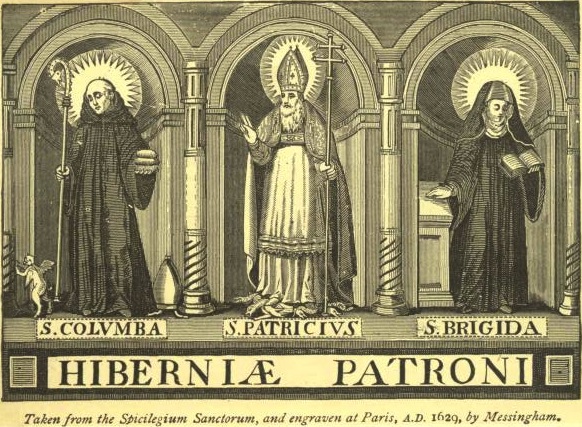
But Patrick, having now become a monk, forgetting all things that were past, applied to the future, and, as if...

We blunder about, here and there, we’re troubled about petty and unimportant things. The devil, who has the power of death, traps us in his snares and wounds us unto death. This is why we must be careful not to become too attached to anything earthly, so that we can avoid his afflictions.
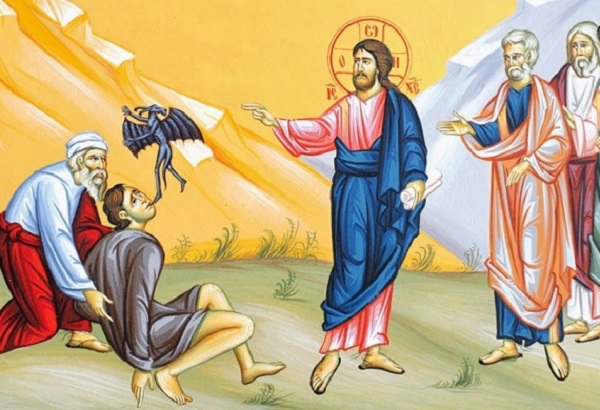
Today’s Gospel (Mark 9:17-31, see sidebar), read on the Fourth Sunday of Great Lent (Sunday of St. John Climacus) brings together a number of themes that we have highlighted throughout our Great Lent: Sunday Bible Reading initiative. Faith, specifically faith in the God-man (Theanthropos) Christ; the importance of discipleship; the performing of miracles by Christ proving His divinity; and, new for this week, the importance of “prayer and fasting,” two essential virtues for every Christian. Consistent with our previous articles, today we will again focus on only a few words from the Bible reading: I believe; help my unbelief! These are the five words that the father of the troubled child “cried out” to Christ before He “rebuked the unclean spirit.” Last week ...
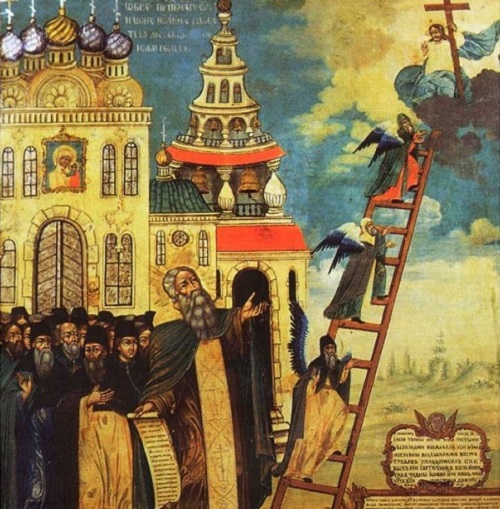
After the middle of this period , then, the Church provides appropriate additional help in our ascetic efforts, which differ in accordance with the capacities of each one of us, by presenting the perfect figure of asceticism, Saint John of the Ladder, that great asceticwho really did shed blood through his spiritual struggles in order to receive God the Holy Spirit. The whole of the striving which brought him to God is described by him in his work ‘The Ladder’, a book which, for monastics, is the surest road-map for their way of life. Of course, the Church recognizes our human weakness, but doesn’t make any concessions to it. It continues to set the bar high, showing us what’s perfect, ...

‘This kind cannot be driven out by anything but prayer and fasting’ . This phrase in the Gospel reading concerning the miraculous cure of the possessed young man suggests the power and value of prayer. Saint John of the Ladder, whom we celebrate today calls it ‘God’s devout tyrant’, since it won’t leave us in peace. The message of Holy Scripture, the teaching f the Fathers of the Church, consider prayer to be a natural expression of the soul, a vital need, and also the supreme, unique, privilege of us as human beings. This is because prayer has its roots in the very beginning of the creation of the human race. After the fall of the first-created, we hear God saying ...

We know that the Lord wants us to bear insults, mockery and hardships with patience, while the devil desires the opposite. So if we give in to what the devil suggests, it’s clear that we’ve turned ourselves and our will towards pleasure-seeking and that we’re paying no attention to the Lord. When we feel deep sorrow, however, over submitting to the devil’s provocations, then it’s equally clear that we’ve turned to God, by loving and following the strait and narrow path of His commandments.
When the soul loses humility, it also loses grace and the love for God, and then fervent prayer is extinguished.
Humble yourself and confess from now on, because confession involves holy humility, without which nobody can be saved. It’s a great joy for the devil if he can persuade people to hide their diabolical thoughts, because then he’ll succeed in his carefully-planned aim of harming our soul.
If you want to pray properly, don’t sadden anybody. Otherwise you’re praying in vain. Whatever you’ve done against someone else, who’s wronged you, will come back to haunt you at the time of prayer.
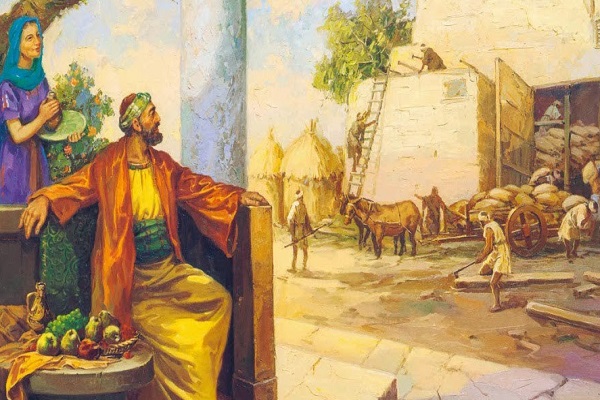
The rich are useless. Yes, useless, unless they’re generous and charitable. But, unfortunately, not many rich people are distinguishged for their love of others. Most of them wallow in self-love, in hard-heartedness and sin. So don’t envy them. Think, rather, about Peter and Paul about John and Elijah, about Christ Himself, Who had nowhere to rest His head. Imitate the poverty of Him and His saints, who were deprived of material goods but enjoyed untold spiritual wealth. Always remember the Lord’s declaration on how difficult it is for the rich to be saved: ‘It’s very difficult for those with money to enter the Kingdom of God. It’s easier for a camel to pass through the eye of a needle than for ...

For me there are three kinds of love: that of the flesh, which is full of spiritual germs; secular love, which is superficial, formal, hypocritical and without depth; and spiritual love, which is true, pure and precious love. This is love which can continue ‘unto the ages of ages’. -How will I know that I have real love, Elder. - In order to understand, see if you love all people equally and whether you think all of them are better than you.
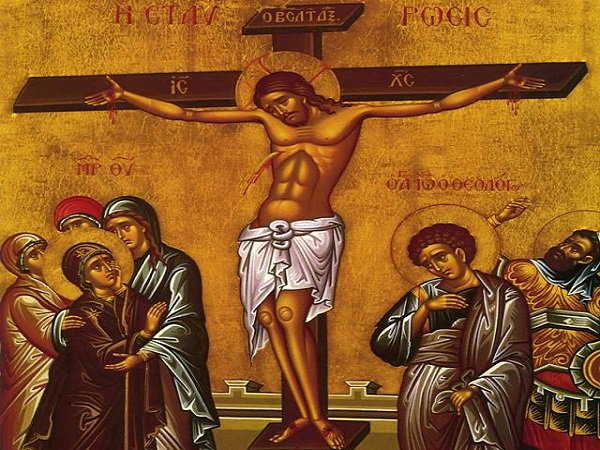
In every age, the message of the Cross has sounded strange. In our own era, however, when comfort and prosperity have been raised to god-like status, the message of the Cross isn’t merely absurd but is also irreconcilable with secular reasoning. It’s terrifying for the rules of life, for the ambitions of those engaged in the pursuit of happiness and well-being. Yet the Gospel insists on preaching Christ’s words: ‘Let those who wish to follow me deny their self and let them take up their cross and follow me’. Self-denial and acceptance of the Cross reveal the authenticity of our call and of our destination. While the raucus and facile slogans of the world may initially attract us, in the ...

God made us to be royalty, not to be defeatist and menial. Once we’ve begun to reign over our passions and the sins which enslave us, our spiritual freedom becomes a free, spiritual kingdom in its nature and therefore in our decisions.
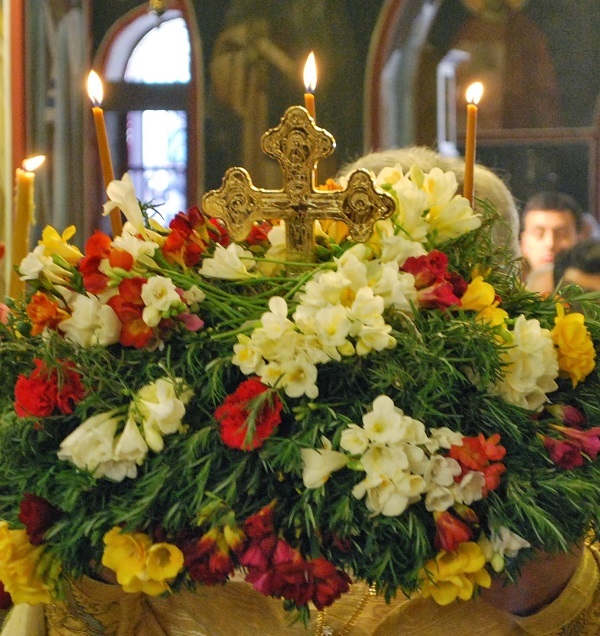
In the middle of the time of Great Lent, we have the Sunday of the Veneration of the Cross. The rubrics for the day begin as follows: ‘Since we, too, are, in a sense, crucified through the forty-day fast, mortified by the passions…the precious and life-giving Cross is brought forward as though elevating and supporting us’ . Christ’s Cross, which we venerate on this Sunday, isn’t to be found only in the middle of Great Lent, but informs the whole of the period. It’s immanent in the whole of the history of God’s providence for our salvation. Last Sunday, we celebrated Saint Gregory Palamas, who had this to say on the subject: Christ’s Cross ‘was foretold and foreshadowed from ancient times ...

Today’s Gospel (Mark 8:34-38; 9:1), read on the Third Sunday of Great Lent (Sunday of the Holy Cross) is one of the most well-known Bible readings, which includes the renowned question: “For what does it profit a man, to gain the whole world and forfeit his life?” The Gospel passage begins with a powerful statement, a challenge, in fact, from our Lord and Savior Jesus Christ: “If anyone wishes to come after me, let him deny himself and take up his cross and follow me.” The Week 1 installment of our Great Lent: Sunday Bible Reading initiative focused on five words: Follow me and Come and see. Today we will focus on only three: If anyone wishes. Does Christ say “You have ...