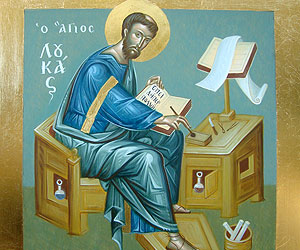
Both Luke’s Gospel (1:3) and the Book of Acts (1:1) are addressed to a man named Theophilus, whom Luke calls “most excellent” (kratistos). This honorific adjective, which in antiquity a person might use when approaching someone of a higher social class than himself, was deemed especially appropriate for addressing government officials. Indeed, Luke himself provides three examples of this usage: the letter of Lysias to the governor Felix (Acts 23:26), an address to the same man by Tertullus (24:3), and St. Paul’s speech to the governor Festus (26:25). It is not surprising, then, that many interpreters of Holy Scripture think Theophilus was a Roman political figure. This is an attractive and likely suggestion. Apostle Luke, icon by hand of Federico ...