Some people erroneously think that the memento mori, the remembrance of death, poisons life. It doesn't. Quite the opposite. It teaches us to be attentive and to distance ourselves from everything that actually does poison our life, our real life.
Some people erroneously think that the memento mori, the remembrance of death, poisons life. It doesn't. Quite the opposite. It teaches us to be attentive and to distance ourselves from everything that actually does poison our life, our real life.

People who seek Christian perfection renounce all their possessions. And those who wish to be saved give alms, in accordance with their means. They avoid misuse of their wealth. "Saint Ignatius Brianchaninoff" Read more “Words of Life” at www.pemptousia.com

The question of evil has not been examined much in the Orthodox Church. In comparison to other Christian dogmas, its solution remains as expressed in a form which reveals the truth, of course, but one clouded in the making. Evil has its origin and its support in the free will of created spirits, be these spirits part of the angels or human beings. This is the Christian position. But there’s a long way to go if we’re to understand it. The Church was once, at the time of the Gnostics, under considerable pressure to develop a theory concerning the source of evil. All schools of Gnostic thought were tormented by the problem of the question of the origin of evil. And ...
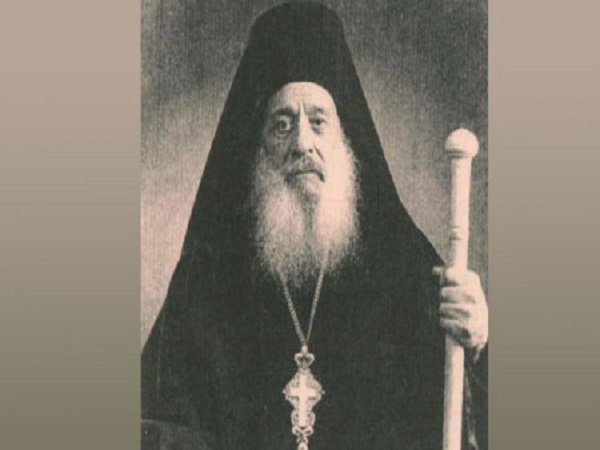
Your Eminence Ioustinos, Metropolitan of this God-preserved see, Venerable Fathers, and my beloved children, I would like to begin by saying that I’m not used to speaking at such gatherings, because my abilities to do so are limited. But, out of obedience and at the invitation of my greatly respected and beloved Chief Shepherd, I’ve summoned the courage to be with you today to say a few words which will, I hope, be constructive. To be honest, when His Eminence suggested this, I was surprised and tried to back out, justifying my reluctance by saying that there’s no lack of more able speakers and preachers. But with the blessing and good wishes of my venerable Elder and Abbot, Parthenios, I accepted the invitation, ...

The heavy, soul-destroying burden of the heart will flee quickly. You'll feel relief and you'll be convinced that there are evil spirits flying around us and ever seeking our downfall. They besmirch our hearts with the poison of dark and evil thoughts.
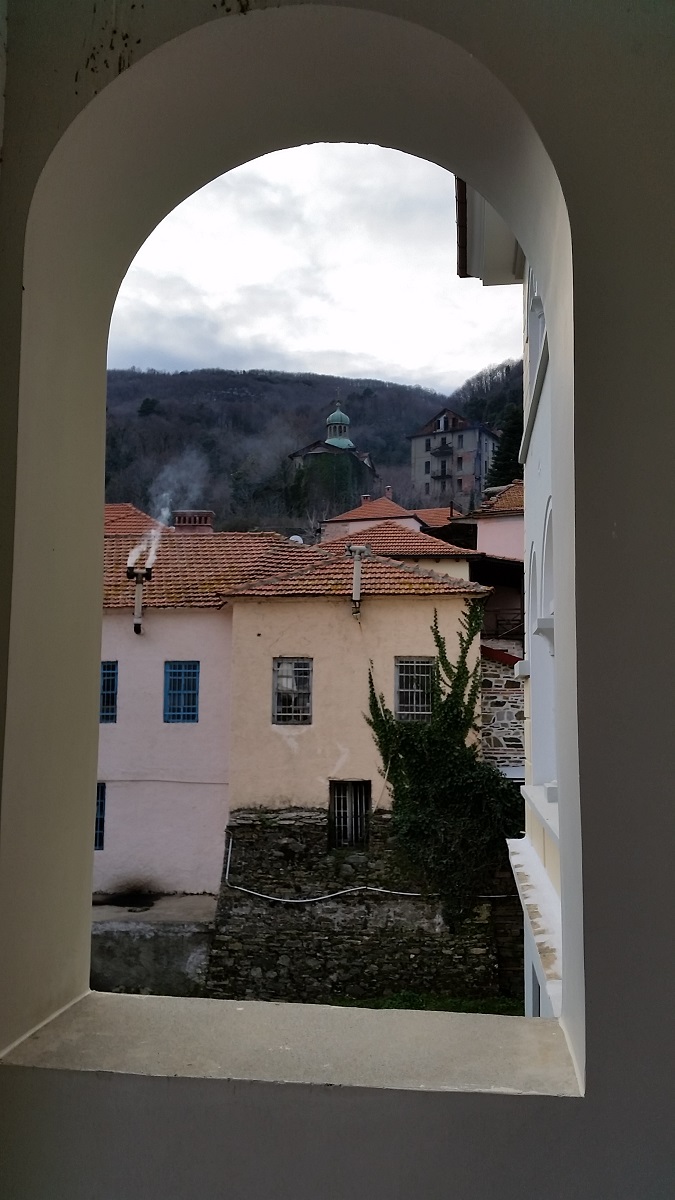
The Mother of hell is vainglory, which makes a fierce flame and feeds the poisonous snake. Whereas everything else ends with death, it continues to squabble even after death, to show off its nature over the dead body. "Saint Nectarios of Pentapolis" Read more “Words of Life” at www.pemptousia.com
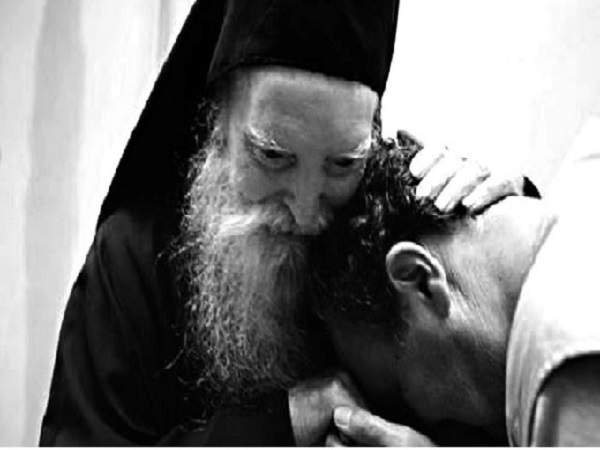
Somebody steals two hens from the priest’s henhouse and after a while decides to go and confess. ‘Father, I stole two hens’. ‘Take them back’. ‘Would you like them?’ ‘Me? No. Give them back to the man you stole them from’. ‘He doesn’t want them’. ‘In that case, keep them’. Very often, our own intention’s the same: to prevaricate, that is to avoid telling the whole truth. This is why I thought, given the time of year, that I might make a couple of clarifications on this enormous subject and the many confusions it usually gives rise to. We think that going to confession means being taken to court. In fact, lots of people even say, when they come for confession: ‘How will you judge me now, ...
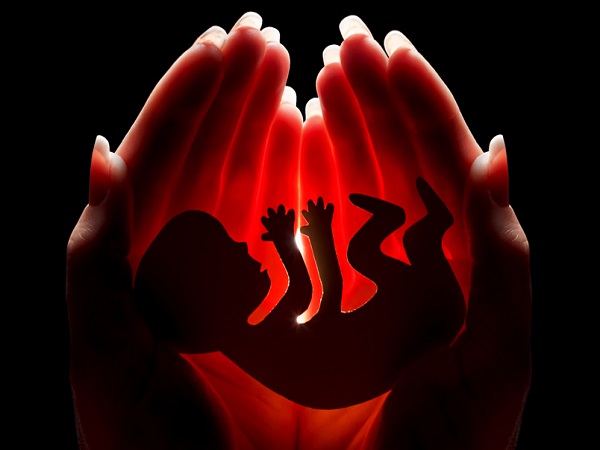
In keeping with the two thousand year continuity of the Faith, contemporary hierarchs and theologians have been equally outspoken about the doctrines of Orthodoxy with regard to abortion. Archpriest John Meyendorff, theologian and later Dean of St. Vladimir’s Theological Seminary spoke to New York State’s liberal abortion laws in 1972, 1,281 years after the Quinisext Council and one year before Roe vs. Wade:14 The fact that this interruption takes place at an initial stage in the human life process makes, of course, a psychological difference, but does not change the nature of the act of abortion being killing, and as such a very grave sin, because killing is evil....The hundreds of thousands of legal abortions performed in New York hospitals are ...
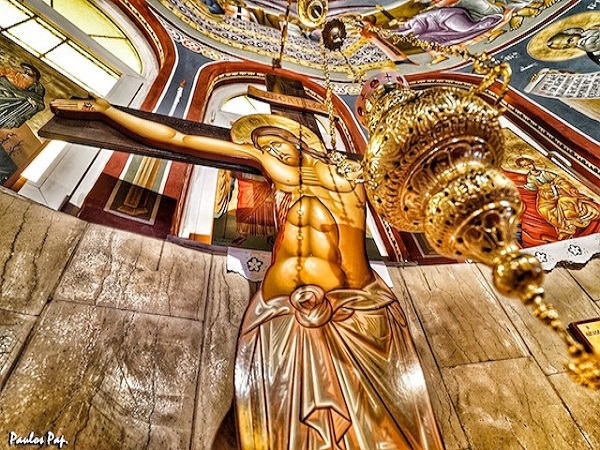
Let's suppose that you can't be merciful through your speech. What you can do, however, if somebody gets angry with you, is to have mercy on them and show them patience at the time when they're upset, because you can see that they're being bothered by the common enemy, the devil. Instead of saying something and upsetting them even more, hold your peace and have mercy on their soul, rescuing them from the hands of the enemy. And again, if somebody sins against you, you can always have mercy on them and forgive the sin, and in this way you'll also gain forgiveness from God.

There’s no worse torture than thought itself. There’s no hell greater than thought that’s completely cut off from the Creator and God of all thought, our Lord Jesus Christ, the Divine Word. Human thought without the Lord Jesus can know neither itself nor the world around it. "Saint Justin Popovich" Read more “Words of Life” at www.pemptousia.com

People who seek Christian perfection renounce all their possessions. And those who wish to be saved give alms, in accordance with their means. They avoid misuse of their wealth
Fr. Georgios Metallinos Despite the fact that calendars and the measurement of time are purely conventional in the Christian conscience, temporal definition has sometimes affected Christian society on important theological issues, such as the celebration of Easter. Christian Easter, typologically linked to the Jewish Pesakh (Passover) (Paschal lamb / “slaughtered lamb / Christ”; cf. Rev. 5, 12) was established by the Apostles as a “remembrance” of Christ’s sacrifice on the cross. But the content of the feast and the day on which it was to be celebrated caused serious problems. The Judaizing Christians, the Quartodecimans of Asia Minor, stressed the event of the Crucifixion and celebrated on the 14th day of the month of Nisan, together with the Jews. Gentile Christians, ...
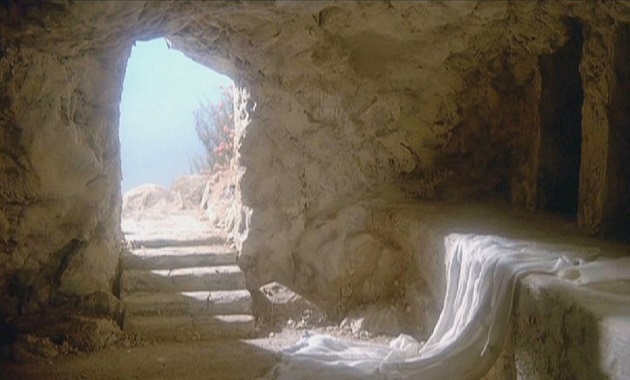
Pascha service It is impossible to describe the profound, almost visceral shock I received when, as a new convert, I came face to face with my first Good Friday in the Greek parish in London, Ontario. Only weeks before, I had been received into the Orthodox Church by chrismation in that very ethnic community. My whole first Pascha as an Orthodox Christian was therefore, understandably, somewhat overwhelming. Though now incongruously "one of them," I was still very much an extremely self-conscious anglophone outsider. My visceral shock on that Good Friday did not come about, however, from not having previously experienced an Orthodox Good Friday. Ten years before, while a graduate student in Paris, I had lived through an entire Orthodox Holy ...
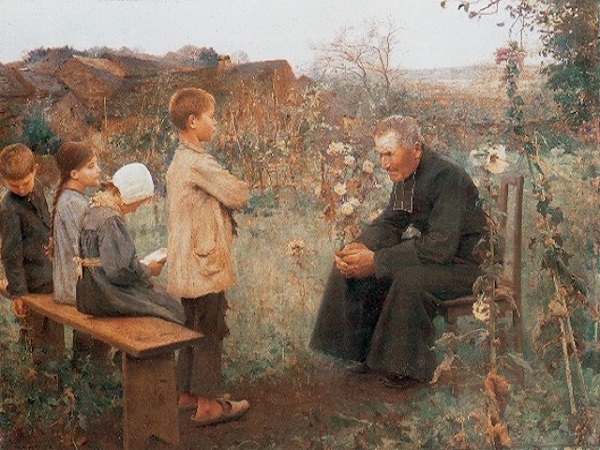
Those who want their words to have an effect on their audience shouldn't stop giving encouragement and advice on the same things, nor should they change the subject until they've seen that a previous exhortation has taken root properly in their souls. That's what teachers do; they don't go on to reading with the children until they've learned the letters properly.

https://www.youtube.com/watch?v=aeskW7dmOMI

Knowledge is awareness of God. If you really want to know God, get to know yourself first. "Saint Cyril of Alexandria" Read more “Words of Life” at www.pemptousia.com

On Holy Saturday the Church directs and concentrates our attention on our Lord’s tomb. In the whole liturgical year, there is no day with a more complex character than Holy Saturday, for this day shares both in the sorrow of the Passion and in the joy of the Resurrection. The celebration of Easter, which has been more and more advanced, has ended by annexing the greater part of the day of Holy Saturday. It is possible to distinguish in Holy Saturday two consecutive parts, one of which still belongs to the time of the Passion, and the other already to the time of Easter… Source:athirma.gr As we have indicated, Holy Saturday already ‘pierces’ into the rite of Christ’s burial which is ...
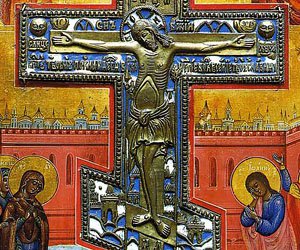
When Christians talk about death, they don’t do so with pessimism, they aren’t resigned to it, they don’t think it natural. They see it principally as an enemy which must be defeated through Christ. ‘The last enemy to be destroyed is death, (I Cor. 15, 26); ‘The Word became flesh’ (Jn. 1, 14); ‘that he might destroy him who holds the dominion of death, that is, the devil’ (Heb. 2, 14). God became a human person in order to destroy death and sin and to defeat the devil. Christ assumed a mortal body, one that was subject to suffering, in order to overcome death in His own body. Through His crucifixion and resurrection, He defeated death and gave us the opportunity ...
Baptism in the Ancient Church In the first years of Christianity and at the time of the persecutions, no-one could be baptized unless they had first gone through the stage of catechism. When someone the bishop didn’t know wished to become a Christian, the responsibility for the sincerity of their motives was assumed by someone who was already a Christian, whom we know today as godparent. This person was a guarantor of the candidate in the eyes of the Church. Thereafter, candidates were enrolled in the registers of the Catechumens in the local Church and began their ‘apprenticeship’. They learned all the teaching of the Gospel of Christ concerning salvation and were initiated into the Church’s way of life. In the Church ...